Know Thy Neighbour Residency: Cara Teusner-Gartland with Vessel and Fremantle Buffalo Club #1
Cara Teusner-Gartland reflects on a heated disagreement about carrots and raisins as resident Know Thy Neighbour #4 artist with Vessel Contemporary and Fremantle Buffalo Club. As well as her volunteer work with Buffalo Community Kitchen and the Clubs core values of social solidarity, inclusivity and community.
“Community work is about subsuming yourself to the whole, Nick!”
Everyone in the room is in stitches: words of wisdom in the context of a heated disagreement about carrots and raisins. But it’s true, like whatever Aristotle said about the whole being greater than the sum of its parts.
To set the scene, we’re in the Buffalo Community Kitchen (BCK) with boxes of miscellaneous fruit and veg that would otherwise have ended up in the bins. Kilos of apples with spots, cabbage, corn (mould? Starch? When in doubt, chuck it out) and so on and so forth. Every week it feels like a Master Chef mystery box challenge: we debrief at the end of Thursday night with a vague menu planned and find out what we’ve got to work with on Tuesday.
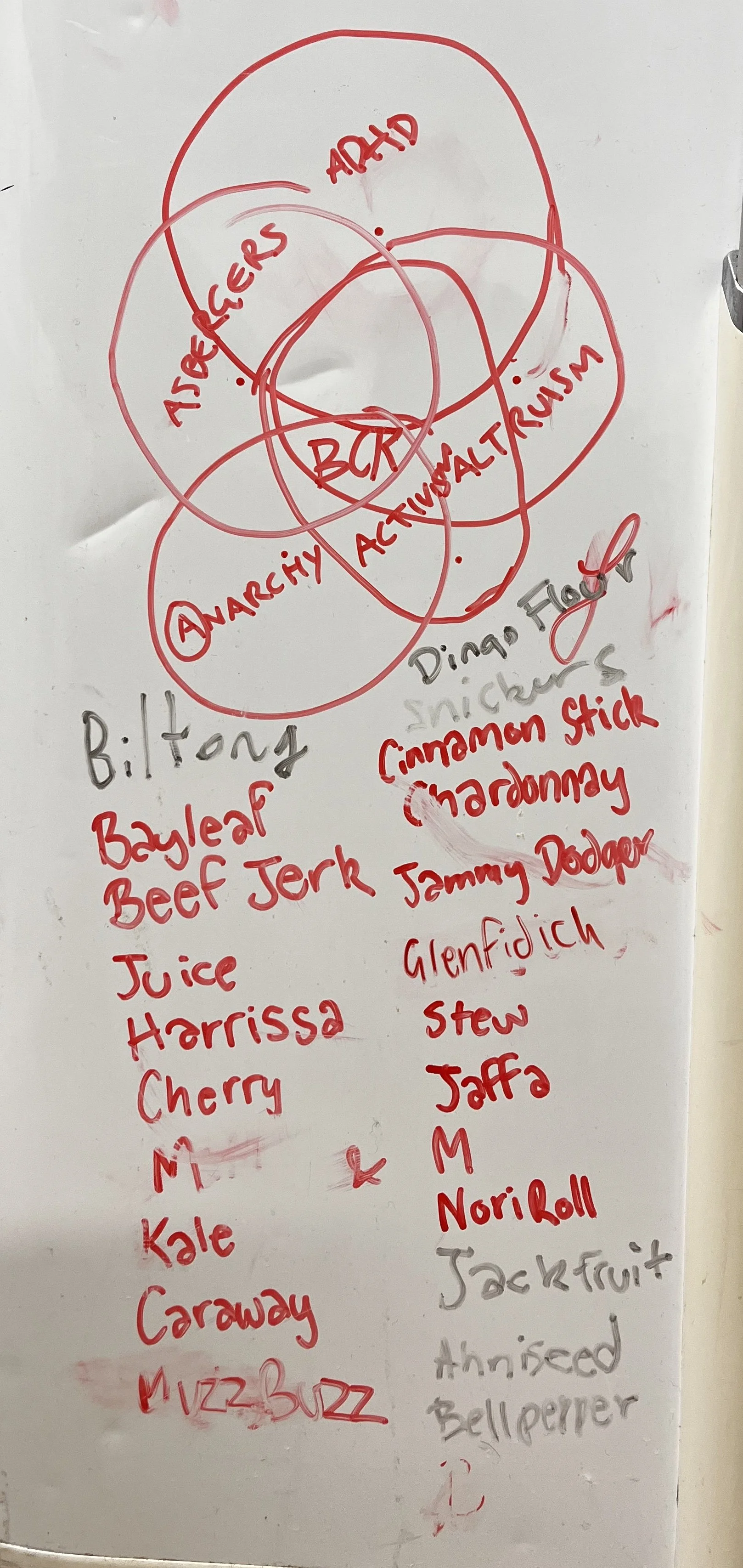
And every Thursday recently it seems like we have new people in. There’s a growing list of honorary nicknames on the fridge (Juice, Jerk Chicken, Chardonnay, M & M etc), and each week it seems there’s a new subset of niche skills in the group - fixing cars, digitising VHS, community organising, filmmaking, the list goes on.
We’ve arrived at the Five A’s of the BCK - Anarchy, Activism, Autism, ADHD and Altruism. Walking into the kitchen every week is a privilege, the people serving and the people we serve have all taught me things I never thought I needed to know and continue to do so.
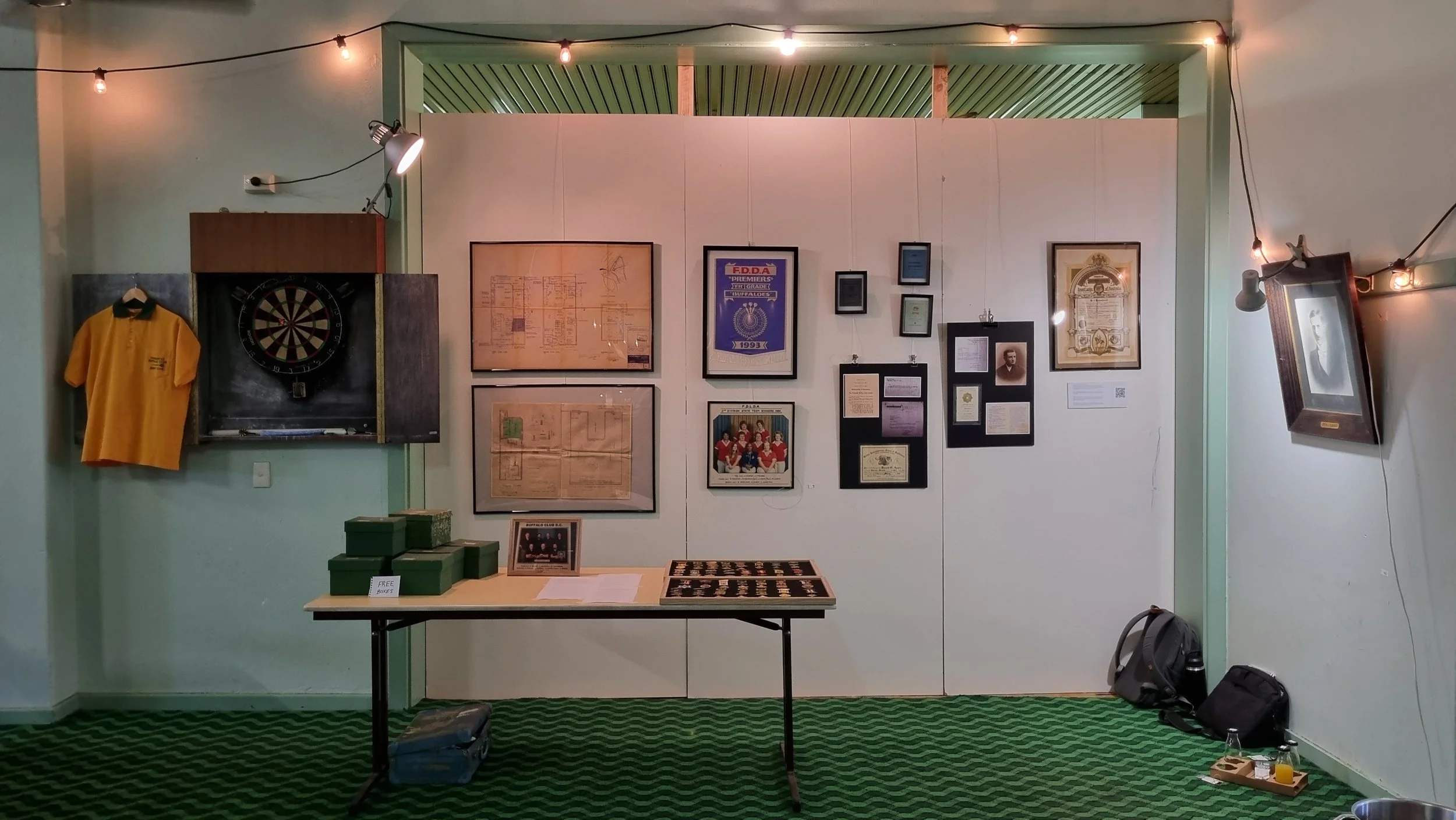
I’m writing these thoughts down while I think about interviewing some of the OGs as part of my research: the folks who’ve kept the Buffalo Club alive and kicking over the last few decades.
I had a chat with Vicki Laurie the other week; she’s a journalist and interviewer who’s done some amazing work over the years, recently interviewing June Oscar about her life and work in Fitzroy Crossing, as part of National Reconciliation Week. Vicki is also the mother of Anna (my collaborator), who’s been the honorary mother and - perhaps involuntary - life coach to the club’s committees over the last few years. Both these women know how it’s done. Just watching Vicki’s interviewing method has given me a lot of ideas; her way of setting the scene, framing questions by introducing the situation, mentioning the interviewee’s role in it, and describing the impact that the outcome had on the broader community. It makes sense. It sets the parameters of the response without restricting it. She allows space for the interviewee to expand on their story, without losing the purpose of the response.
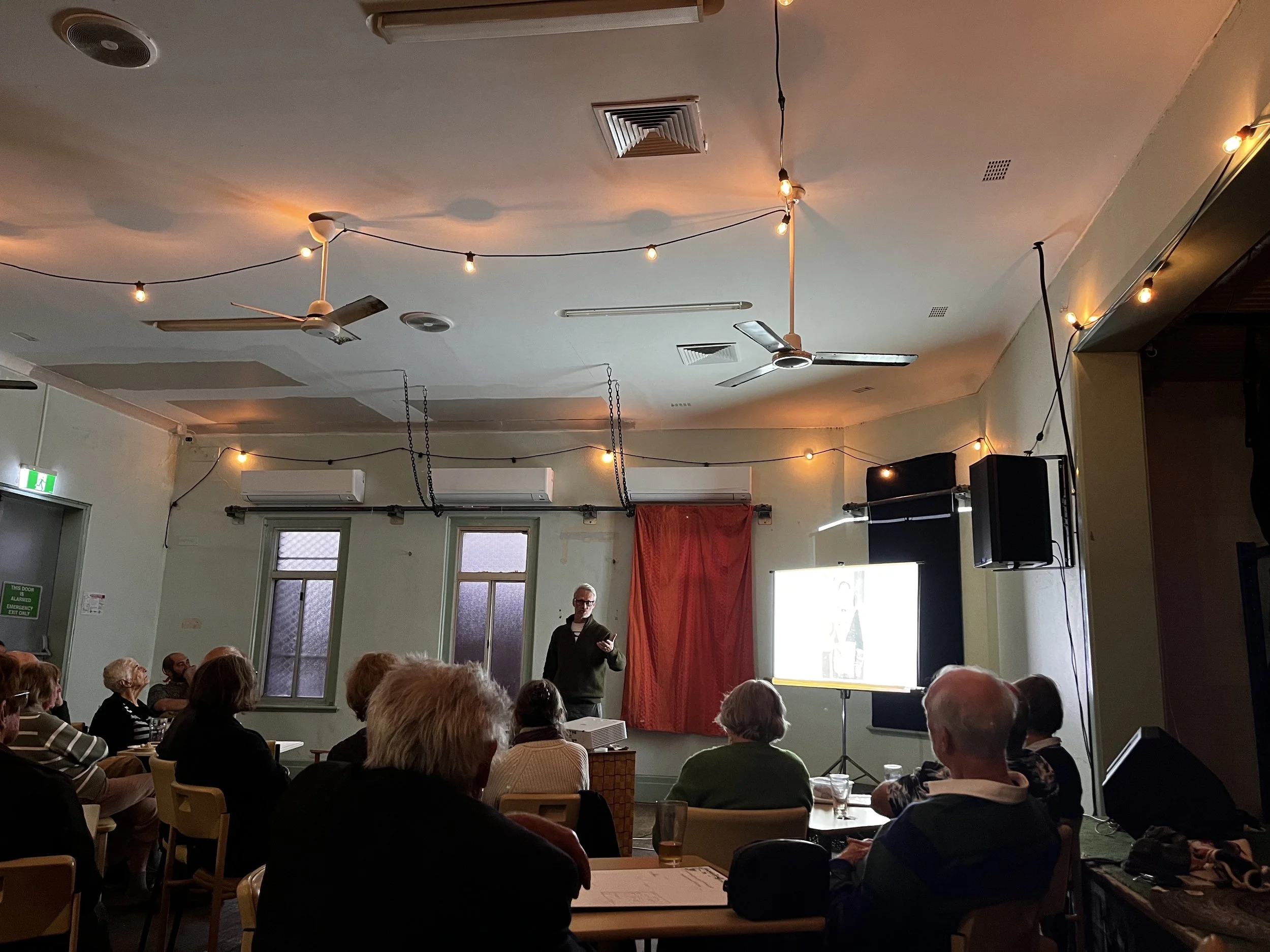
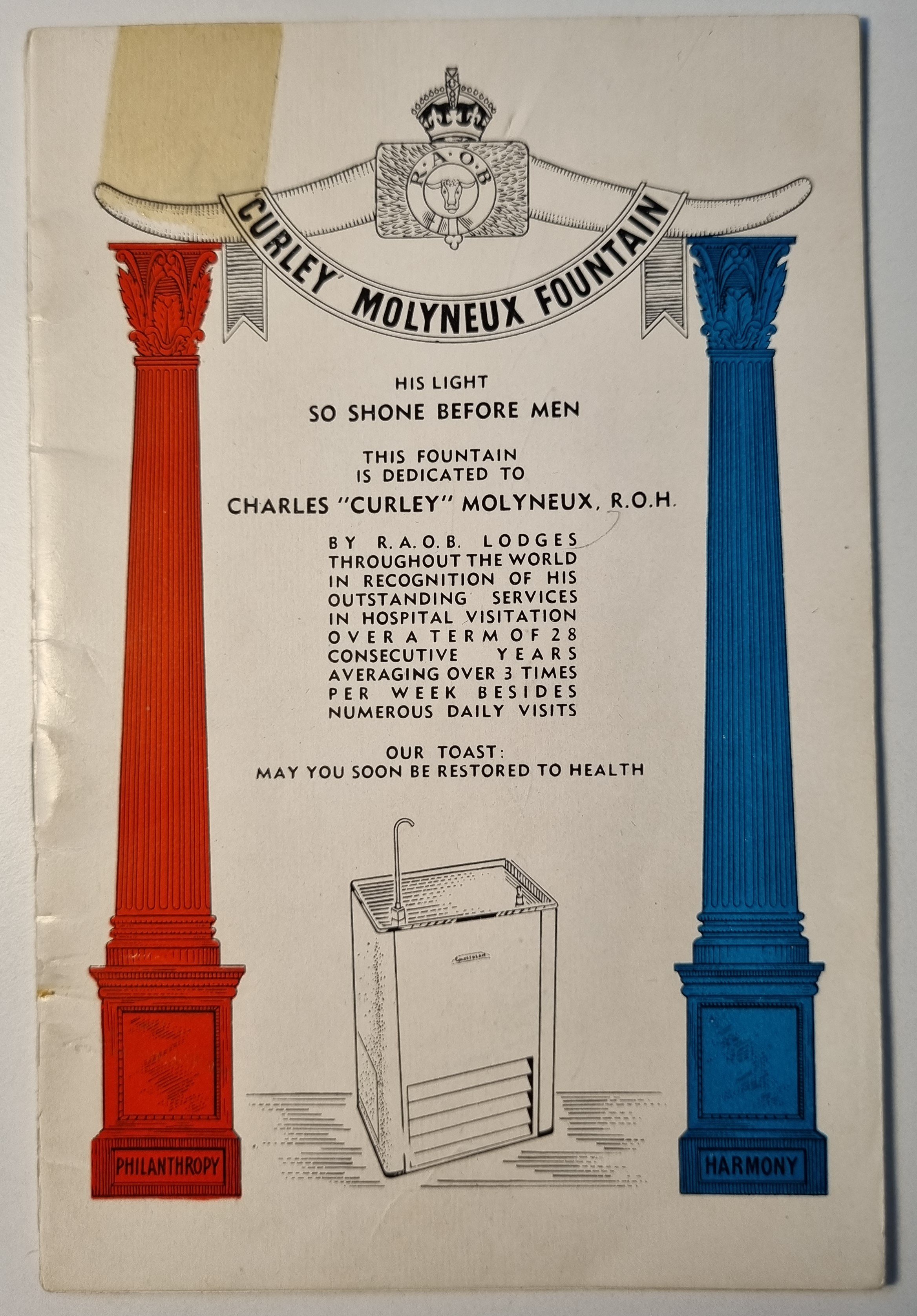
On the 23rd of June, the Buffalo Club History Sub-Committee (BCHSC) hosted the Fremantle History Society’s monthly General Meeting. Sam gave a presentation on the Club’s fraternal history (with a few additions from Mickey Blue-eyes from the Lodge); Oliver spoke about Curley, an individual that the BCHSC have been researching; and I gave an introduction to the Oral History part of my project. The feedback we had was very positive. Members were glad to see the younger generation showing interest in local histories and hoped to stay in the loop with the project.
On the 27th of June, I went to a workshop run by Philip Gostelow with Oral History Western Australia. Coincidentally, Philip is a photographer who Anna and I hope to commission for a photoshoot with some of the significant club members later this year. Although the first part of my research involves filming rather than photography, the workshop was still very useful to me as a guide to framing, lighting and directing the interviewees.
In the past, I’ve had a bit of a ‘yeah nah whatever you feel comfortable with, it’s chill’ approach to community projects. I’ve worked to unlearn this habit over the last year in the BCK, understanding that there is a distinction between hierarchy and facilitation. To give instructions and guidance doesn’t equate to being bossy or confrontational, it can actually be helpful when done with good rapport and a common goal. Similarly, I was a bit nervous about the process of interviewing folks who’ve been involved with the club and its politics over the years; circumnavigating moments when long-term gripes and grudges emerge in the plotline. But the more I speak to people, the more I realise that there’s a reason they’re all still here.
It’s the nature of the club: A space for people of different backgrounds and interests, governed by the core values of social solidarity, inclusivity and community. A few years ago, my friend Billy Bowen had spoken about wanting such a space. One that wasn’t a pop up, a themed venue, or cliquey bar, but one that had longevity. A place where you could meet people from outside of your bubble and really work together.
When he first approached the Buffalo Committee in 2022 there were clashes. Billy and other new members were met with resistance to change and general distrust towards the younger generation, but slowly they came to an understanding, and positive change began to happen. The Club was starting to climb out of debt and people were taking interest in what was going on. Although the Buffalo Social Club and Royal Antediluvian Order of Buffaloes are separate entities, there is a clear throughline in one of the Lodge’s maxims: In things Essential Unity, In things Doubtful Liberty, and in all things Charity. As long as there is a shared set of values uniting the collective, we can set aside differences and treat each other with respect and kindness. And always with Lodge’s motto in mind: Nemo mortalium omnibus horis sapit. No man is at all times wise.
Images: Oli giving a presentation about Charles Curley Molyneux, BCK honarary nicknames, Buffalo Club history exhibit. Source; Freopedia, booklet published to commemorate the Curley Molyneux Fountain. Source; Freopedia.
More about Cara’s project.
More about the Know Thy Neighbour #4: Gestures project.
More about Vessel Contemporary and Fremantle Buffalo Club.
Stay up to date by subscribing to SPACED’s monthly email newsletter, and following SPACED on Facebook and Instagram.
This project has been assisted by the Australian Government through Creative Australia, its principal arts investment and advisory body.
Explore our programs
Know Thy Neighbour #3 (2021-23). Know Thy Neighbour #3 investigates notions of place, sites of interest, networks, and social relationships with partner communities.

Circular Economies (2024-25) is a series of socially-engaged residencies in regional Western Australian communities, culminating in an exhibition at PICA in 2026.
ence.