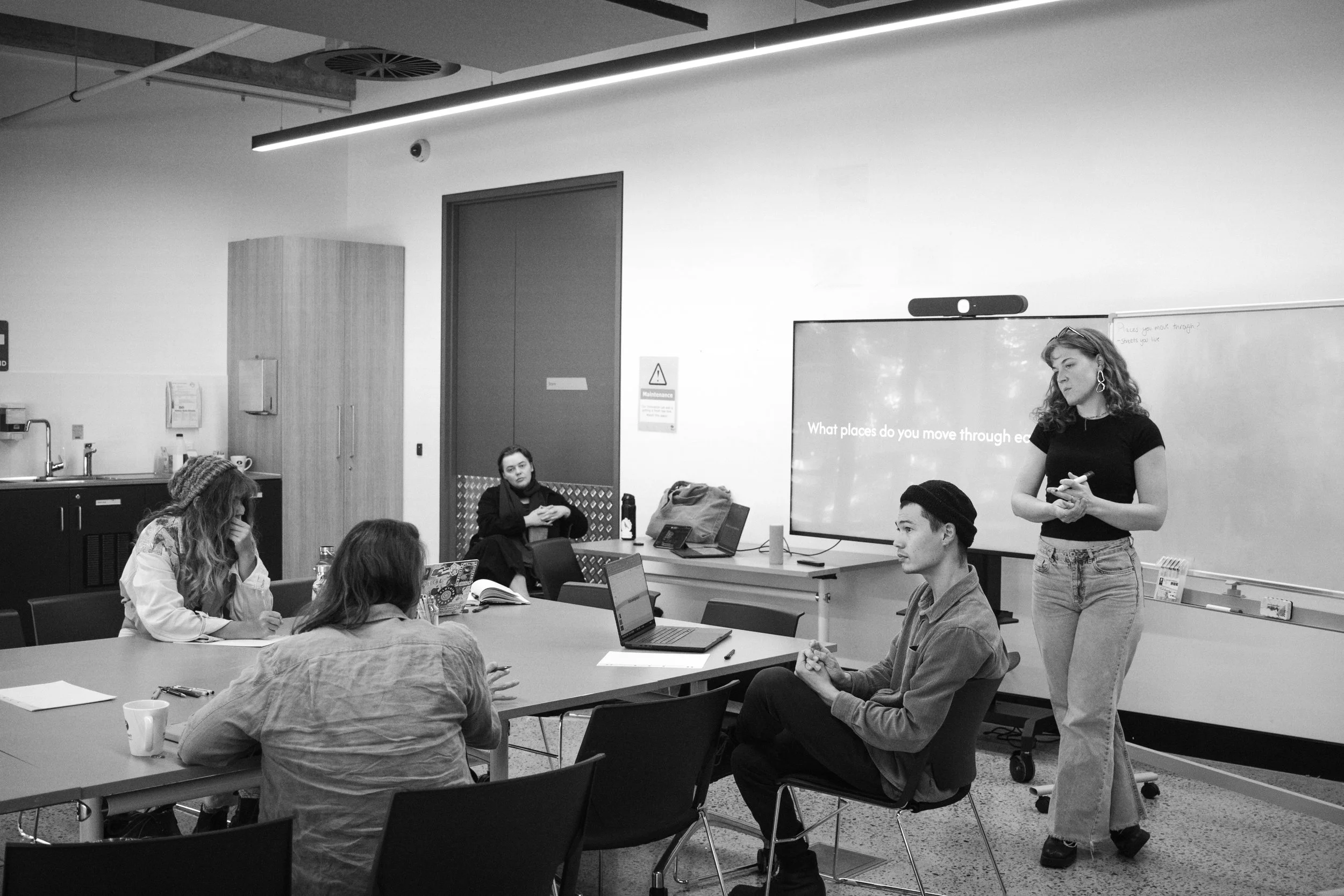
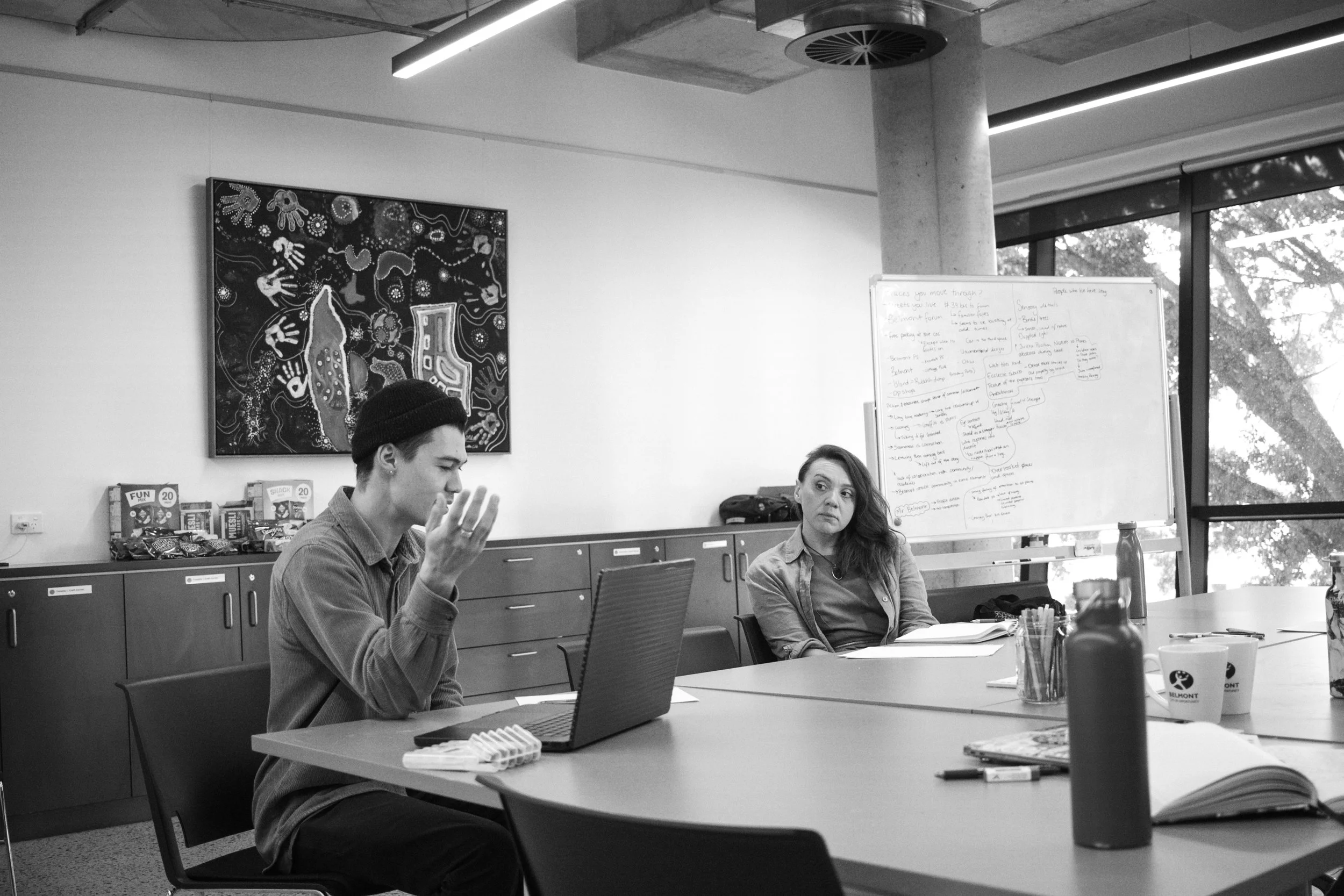
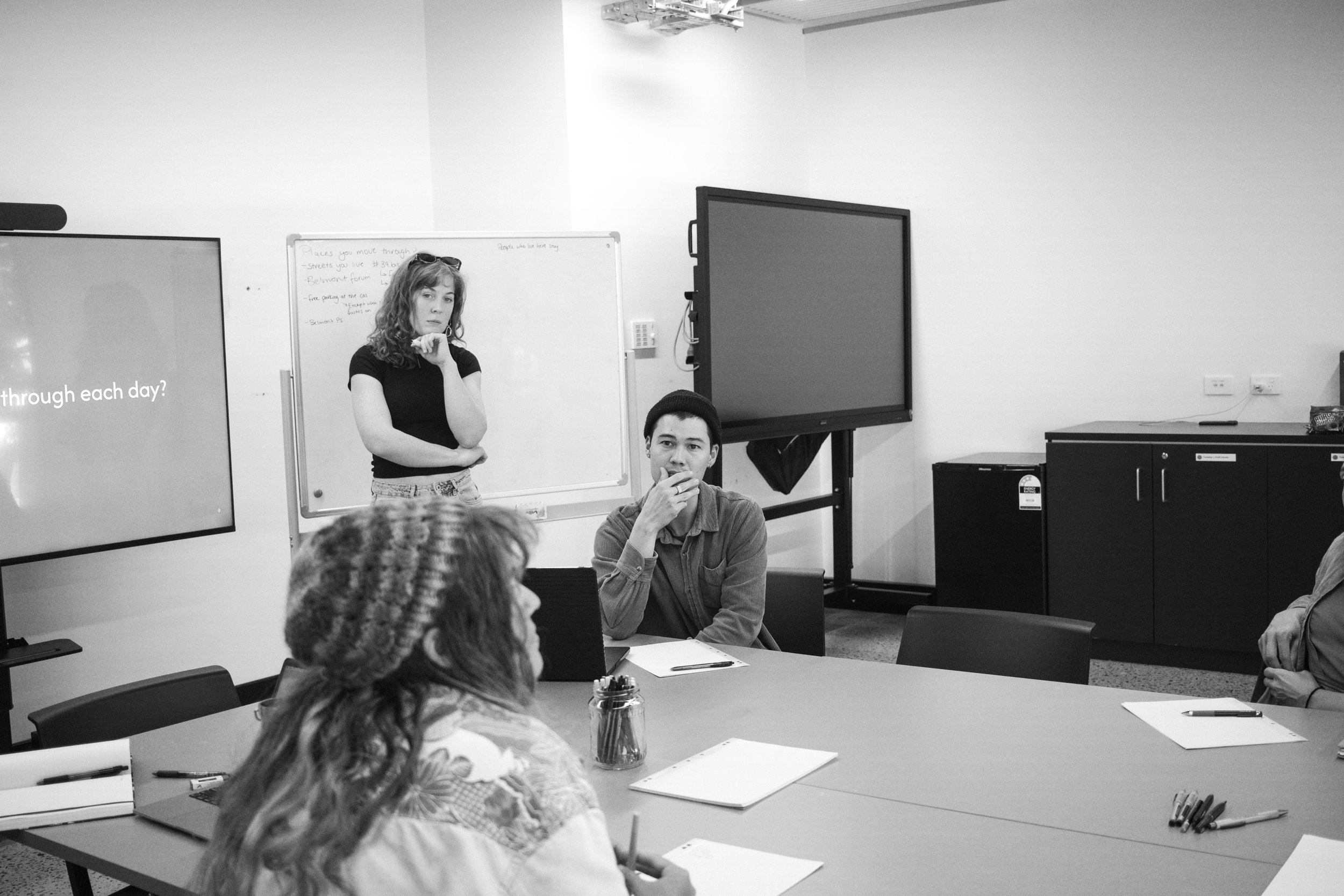
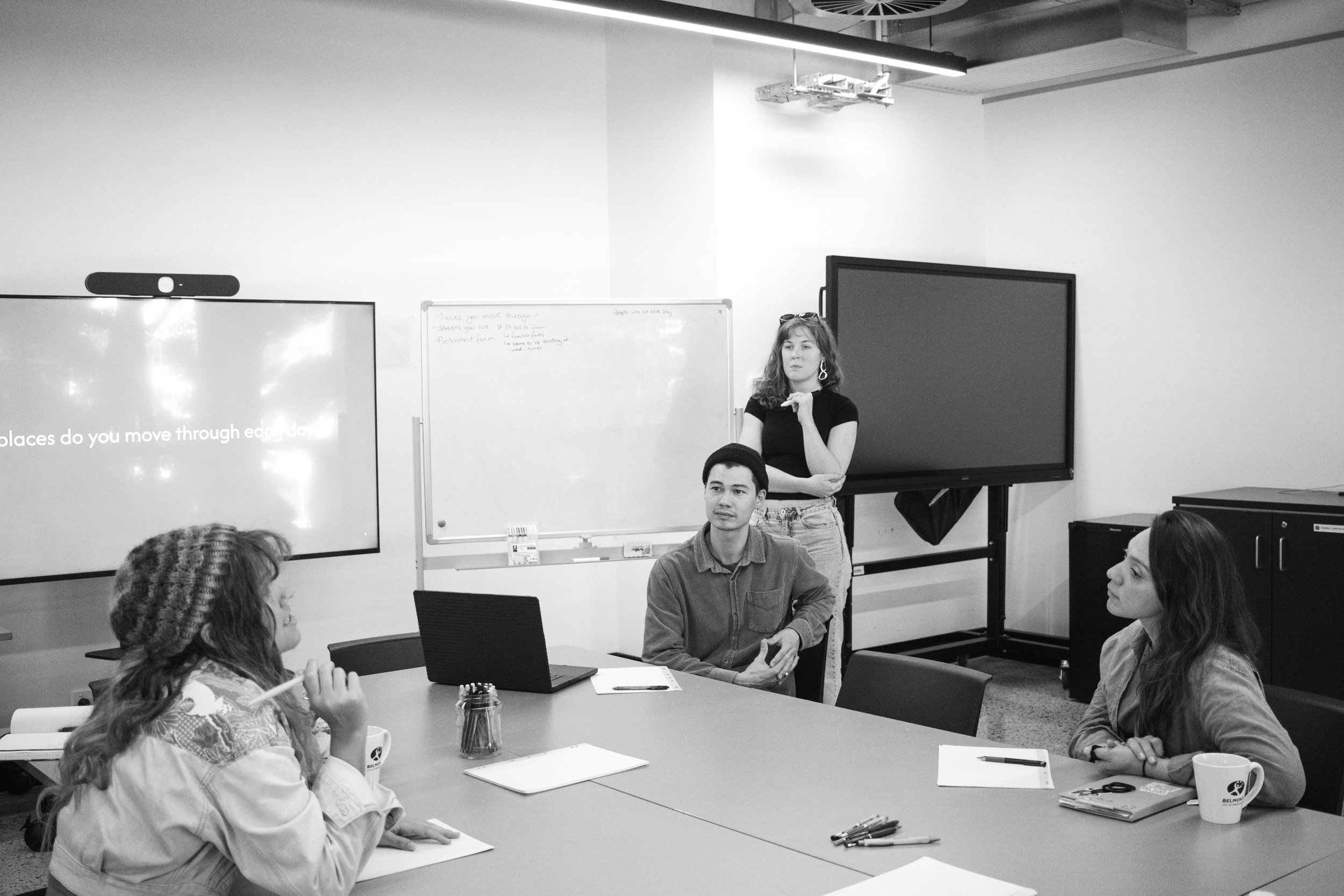
Blue Joy Theatre Company's Mohammed 'Ayo Busari', Shelby McKenzie and Ken Meyer shares ideas on what they’re working towards as resident Know Thy Neighbour #4 artists with City of Belmont. They continue the ongoing reflection on place, memory, photography, sound and the things we discover when we slow down.
Finding Stories in the Things We Leave Behind
What happens when we stop rushing through a familiar place and take the time to really look, listen and notice what surrounds us? This question sits at the heart of Echoes in the Pavement, an interdisciplinary performance project exploring how photography, sound, poetry, movement and theatre can reveal new ways of experiencing a place.
Since the residency began in May, we’ve been exploring our relationships with place, the memories attached to it and the traces people leave behind. We started by listening, in community conversations at Centenary Park Community Centre where Belmont residents shared the places they return to and the details they notice along the way. From there we went walking: along Great Eastern Highway and the banks of Derbal Yerrigan, through Adachi Park and, eventually, into Garvey Park.
We’re experimenting, following ideas and asking questions rather than rushing towards a finished work. For us, this is an opportunity to discover what a place can offer when we give ourselves time to pay attention.
Looking a little closer at Garvey Park
Garvey Park in the City of Belmont has become the focus of our residency. During our initial explorations, we were drawn to the bricks scattered throughout the landscape. Some were weathered, others overtaken by tree roots, and a few bore markings hinting at their history. One brick stamped with the name J. Millard sparked questions about the area's brickmaking history and the stories these objects might hold. Who made it? Where has it been? What has happened around it? We may never know all the answers, but we’re interested in what happens when we let ourselves wonder and talk with residents and people who know its history.
Over the coming weeks, we’ll continue visiting Garvey Park to photograph its details, record sounds and observe how our experience changes depending on where we stand, what time of the day and what we notice. Sometimes, an image raises a question; sometimes, a sound stays with us long after we leave. We want to collect these fragments and see where they lead.
The brick stamped with J. Millard stood out to us because, among all the scattered fragments, it carried a name. It felt like a small trace of someone’s work, connecting us to a history we could see but knew very little about.
Photography helps us look more closely at Garvey Park, from patterns in the bricks and tree roots growing around structures to marks on the ground that suggest someone has passed through. We’re exploring what happens when these images move beyond photography. Can an image inspire a sound, a poem or a movement? Can music emerge from a texture, memory or feeling associated with a place?
We’ll experiment with transforming environmental recordings and everyday sounds into music and soundscapes that respond to the landscape. We’re also interested in using photographs as creative prompts, inviting someone else to imagine the story behind an image without knowing why it was taken.
One idea is to let a photograph travel between people and art forms. An image might begin as an observation at Garvey Park, inspire another person's poem and then become the starting point for a sound or movement experiment. The photograph remains, but its meaning evolves with each interpretation.
Through these exchanges, we’re exploring how photography, sound, and poetry might come together in a live performance audiences can experience through what they see, hear, and feel. Rather than simply showing people the park as we see it, we want to invite them to look again, listen differently and make their own connections.
What we're working towards: Taking the work outdoors
Much of our previous work has taken place in theatres, galleries and studios. Echoes in the Pavement presents a new challenge: how can we create an outdoor performance that exists within the very landscape that inspired it?
We want Garvey Park to become part of the experience, not just its backdrop. We’re imagining trees as projection surfaces, bricks as inspiration for visual installations, and field recordings, music, and community voices creating a soundscape audiences encounter as they move through the park. We’re particularly interested in spatial sound, where the audience’s experience changes depending on their position and movement.
Photogrammetry, a technique for creating three-dimensional digital models from photographs, gives us a way to capture the shapes and textures of the bricks. Those scans can feed into visual installations, with projections carrying their forms onto the surrounding trees. We’d also like to bring them back into clay as ceramic objects, connecting digital experimentation with hands-on making.
Inspecting historical maps of Belmont from 1847, 1913 and 1949 have opened further questions about how the landscape has changed. What existed before today's roads and buildings? What remains, and what has disappeared? Bringing these maps into conversation with contemporary photographs and recordings could help us explore the relationship between a place's past and present.
We’re finding that working outdoors requires a different kind of flexibility from what we’re used to. In a theatre, studio, or gallery, we can shape the environment around the work, but here we have to consider what the environment already offers us. The weather, natural light, electricity, ambient sounds, and the park's openness all influence how we imagine the work taking shape. We’re also realising that having an exciting idea and figuring out how to make it work in practice are two very different things when working outdoors.
We have to think carefully about how people will experience the work, how the different elements will connect and how we can create something cohesive without losing the spontaneity that makes this process exciting. We’re learning to be comfortable with not knowing exactly what the final work will look like yet. Rather than treating that uncertainty as a limitation, we’re beginning to see it as an invitation to experiment, listen to one another and let the work evolve in unexpected ways.
Making space for other people's stories
Our observations are only one part of Garvey Park's story. A park is somewhere to spend time with family, walk to work, sit quietly, or revisit childhood memories. Everyone experiences a place differently, and we want these unique perspectives to inform our work.
We're inviting people who live, work or spend time in the City of Belmont to complete a short questionnaire about the places they return to, the sounds they recognise and the moments that have stayed with them. We're interested in everyday experiences as much as extraordinary stories: a familiar face, a particular corner, birdsong in the morning or a place that feels different from how it used to. These responses will help us understand what makes Belmont meaningful to the people who experience it.
If you have a connection to Belmont, we'd love to hear from you. Share your experiences through our questionnaire here.
Making something together: Our upcoming workshop
Our photography, sound and poetry workshop invites participants to experience Garvey Park through their own observations. Participants will walk through the park with their phones, photographing traces of human presence rather than people directly. These might include footprints near the river, worn paths, brick textures, marks left behind or tree roots growing around objects.
What do you imagine when you hear a sound without knowing its source? What feelings or memories does it evoke? How does your interpretation change when the photograph is revealed? Participants will use these experiences as prompts for spoken word and poetry, responding to another person's perspective rather than their own. Chance encourages us to move beyond familiar stories and imagine new possibilities.
By the end, we will have a shared collection of photographs, sounds and poems reflecting the different ways people experience Garvey Park. Some of these discoveries will make it into the final showing of Echoes in the Pavement.
No previous experience in photography, sound or poetry is needed. We’re interested in curiosity, experimentation and making space for different ideas. If you'd like to explore a familiar place differently, we'd love you to join us. Bring your phone, a power bank, a notebook and a pen, and come ready to look a little closer. More details and RSVP link coming soon!
December and beyond: Sharing the process
We’re working towards a work-in-progress presentation in December, where we’ll share what we’ve been exploring throughout the residency. This presentation is an opportunity to open our creative process rather than arrive with every question answered. We’re excited to test and show what audiences might experience: sound moving through the park, images projected onto trees, poetry emerging from photographs, and music, movement, and installation changing how we see a familiar landscape.
Ultimately, we want Echoes in the Pavement to be more than a performance that happens to take place in a park. We want Garvey Park itself, its bricks, trees, pathways, histories, sounds and community memories to shape the work.
We’re still discovering what that means, one photograph, one sound, one poem and one experiment at a time. We hope you’ll follow our journey, share your experiences of Belmont, join us for the workshop and see what we’ve been working on in December. Sometimes, the most interesting stories aren't the ones we bring into a place. They're the ones we discover when we take the time to listen.
Echoes in the Pavement is being developed on Whadjuk Noongar Country. We acknowledge the Traditional Custodians of the lands and waters of Derbal Yerrigan, and pay our respects to Elders past and present.
Images courtesy of the artists.
More about the Know Thy Neighbour #4: Gestures project.
More about the arts in City of Belmont.
Stay up to date by subscribing to SPACED’s monthly email newsletter, and following SPACED on Facebook and Instagram.
This project has been assisted by the Australian Government through Creative Australia, its principal arts investment and advisory body and with support by the WA Government.





Explore our programs
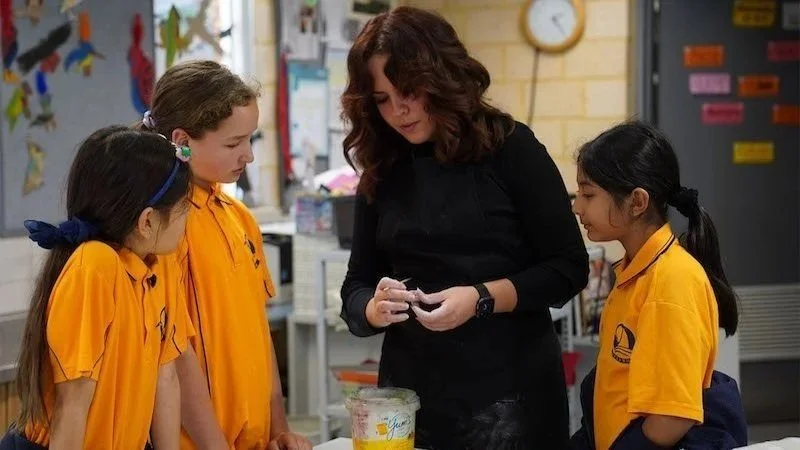
Know Thy Neighbour #3 (2021-23). Know Thy Neighbour #3 investigates notions of place, sites of interest, networks, and social relationships with partner communities.
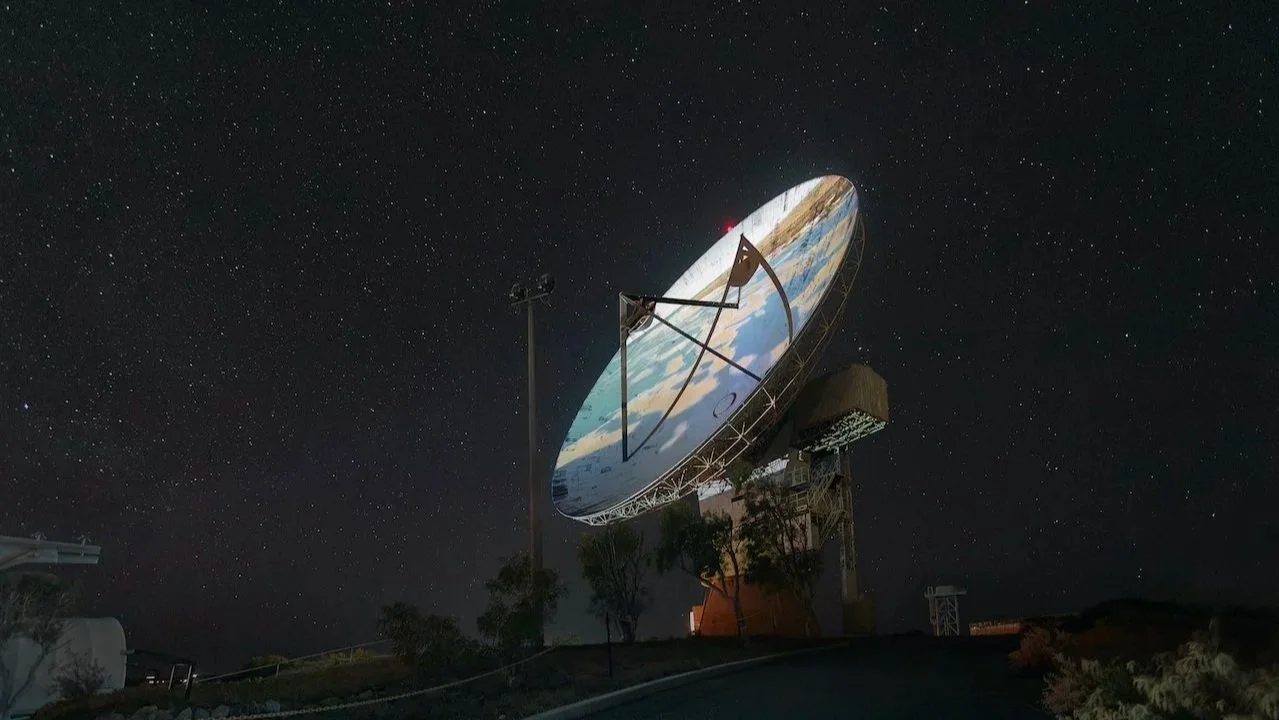
Circular Economies (2024-25) is a series of socially-engaged residencies in regional Western Australian communities, culminating in an exhibition at PICA in 2026.
ence.