Makaela Rowe-Fox continues to build close relationships with the women of Ishar Multicultural Women’s Health Services during her Know Thy Neighbour #4 residency, in partnership with the City of Stirling. They explore Mirrabooka through terrascope lenses and reflects on how looking has become a process of reaching.
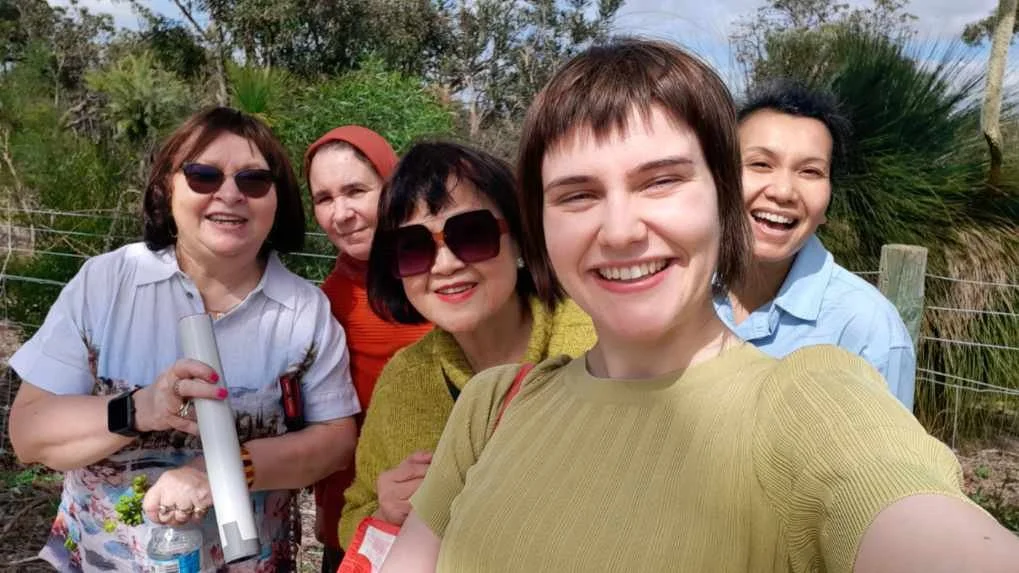
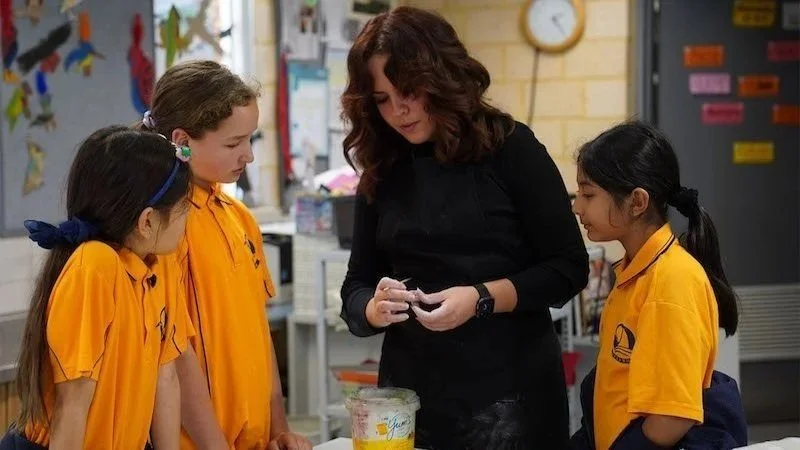
In the second stage of my residency, I am working closely with a smaller group of women I met through Ishar Multicultural Women’s Health Service in the first workshop series called ‘Life in Detail: Macro Photography and Video’. It has been a wonderful and rare opportunity to be able to develop ideas and undergo a co-creation process for many weeks now.
***
Recently, project participant Gabriela texts me photos of a tree and writes,
‘When the trees have eyes and wombs’
A shared practice is beginning to emerge.
Influenced by the perspectives of our microscope-cameras, each other and the world around us, we are drawn to particular symbols; the moon, bleeding trees, eyes, wombs.
Our practice is one of repetition and experimentation.
Since the very first workshop together, we have returned over and over to the Moon; discussing, reconsidering. Bisi points out that when you look to the sky, you can’t see the details of the Moon with the human eye. Patricia notes that the Moon was once a part of the Earth. Perhaps – without a readily available telescope – we can look to the Earth to see details of the Moon.
With these evolving ideas, our microscope-cameras have also begun to change.
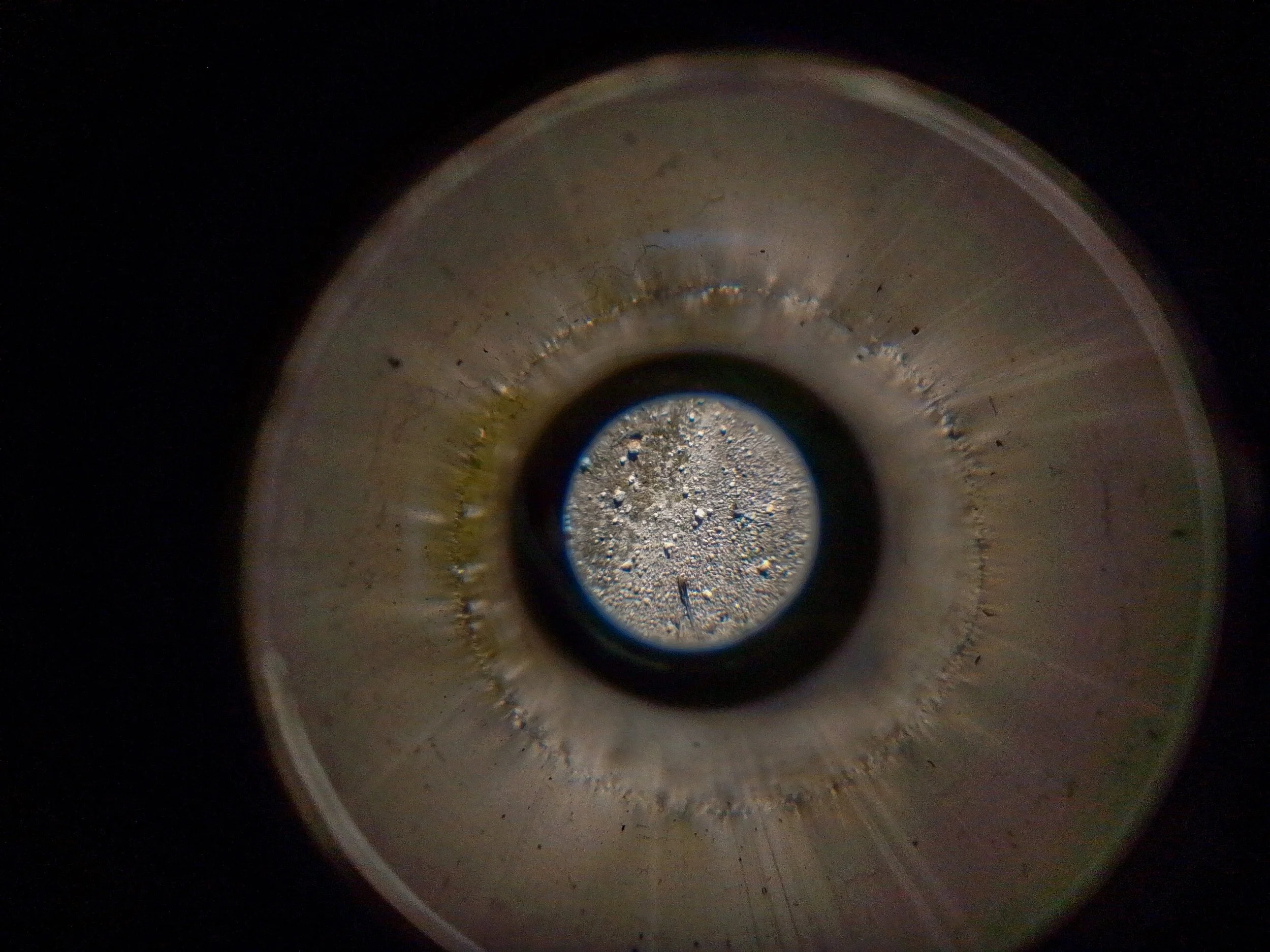
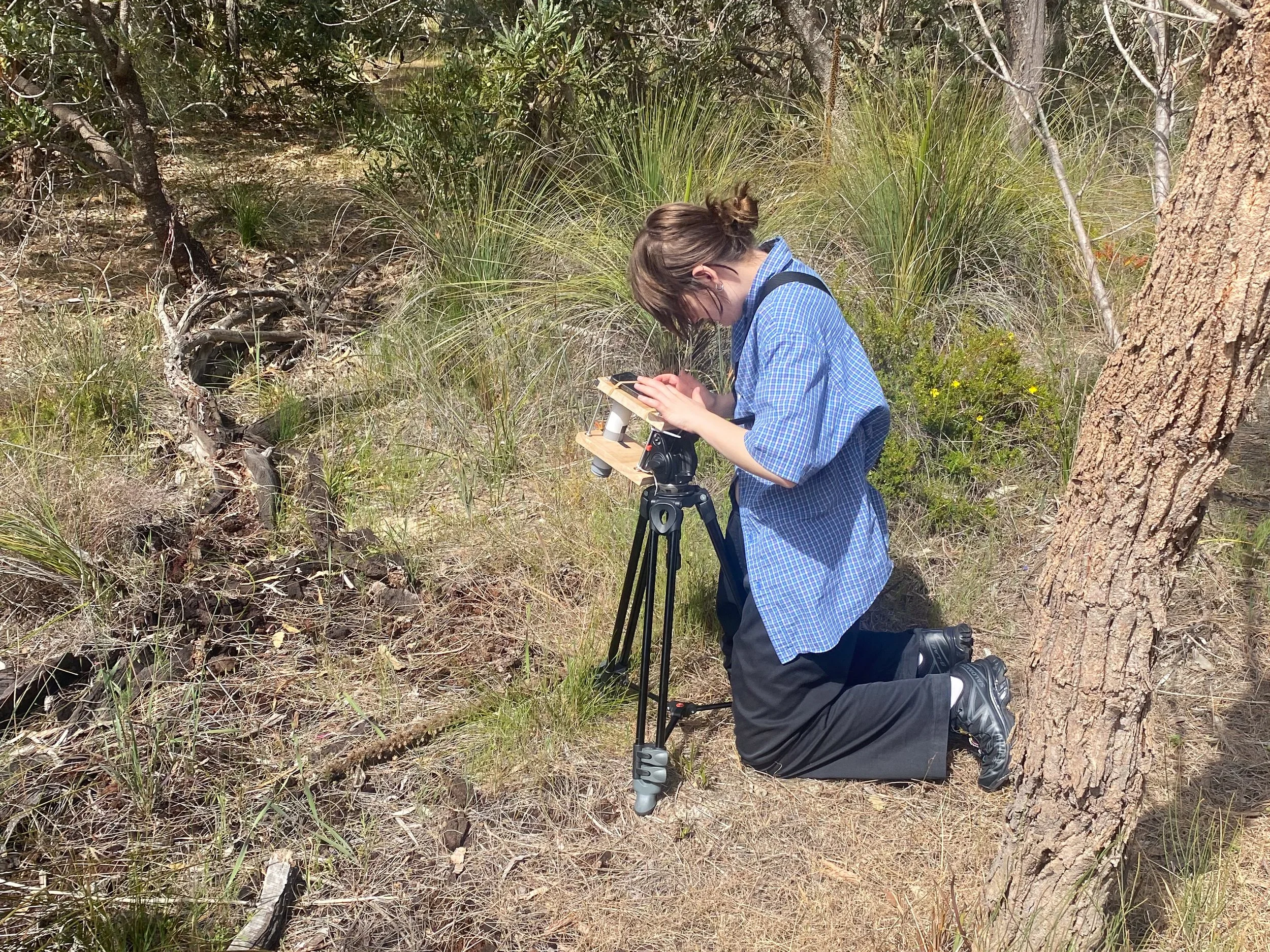
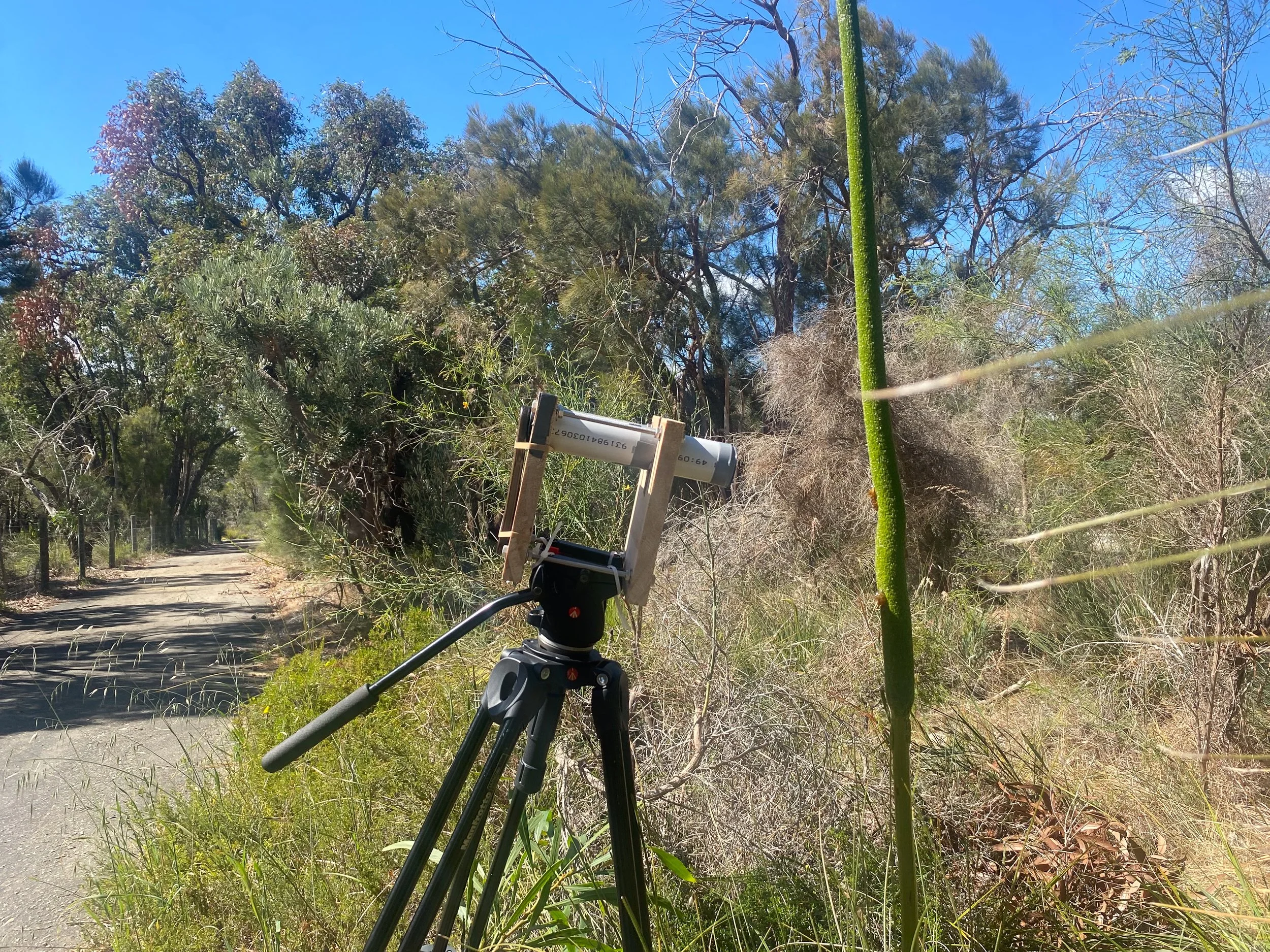
The term ‘microscope’ has always been a conceit. The tool is built from magnifying lenses that rework our perspective; making small things big, big things small, and literally turning our point of view upside down.
Now, increasingly, our tool feels like a telescope; one that is for the Earth rather than the sky.
We call it a terrascope.
***
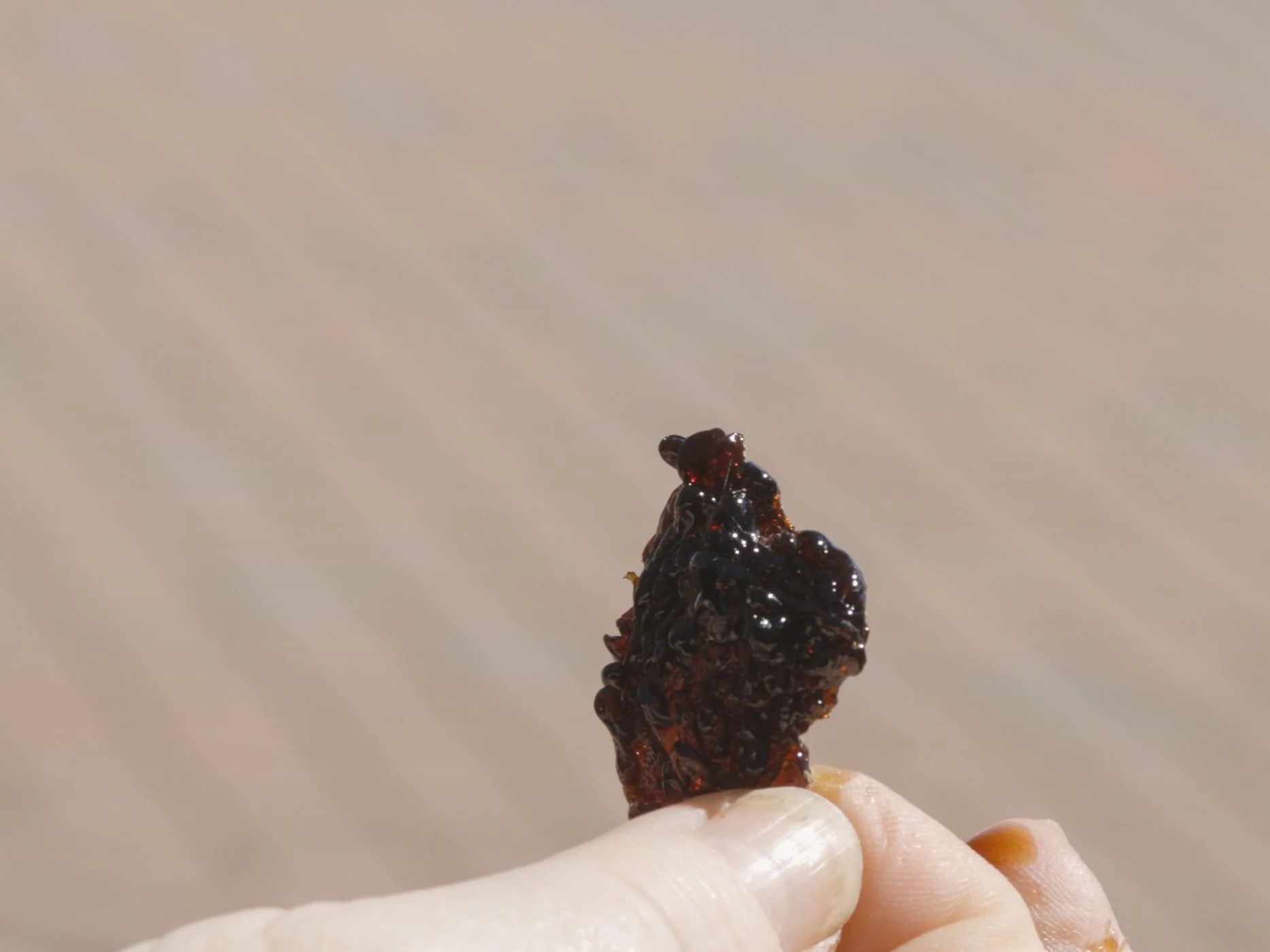
Studying the trees surrounding Mirrabooka Community Hub with our terrascopes, we begin to notice many are bleeding a dark, sticky resin.
We keep returning to the question, ‘what could it mean?’
There are multiple reasons why a tree bleeds, however often in the case of the Eucalyptus tree it is a sign that it is sick, or it is under attack from an invasive species. Insects like the shot-hole borer are a possible culprit. For our group, however, the bleeding tree becomes a complex and multi-faceted symbol of coexistence.
Gabriela points out that, ‘we bleed to create’. We talk about how insects can get trapped in the resin, and then preserved for centuries or more. We talk about death and lifetimes and wombs. While the bleeding tree could be a sign of disease, we see it simultaneously as a protective figure, as symbolic of new life.
Rather than focussing on the ‘right’ or scientific reasoning behind the bleeding trees, we spend time mapping our associations; imagining, sometimes conflating and ultimately attempting to reach beyond our first thoughts.
In our shared practice, looking has become a process of reaching.
Reaching across time.
Reaching across distance.
Reaching across species.
Reaching across cultures.
***
The artwork that is emerging is deeply connected to this group of women, our relationships and to the Mirrabooka area. I feel very fortunate to be able to be co-creating with such thoughtful and generous women.
In the upcoming end-of-residency showing, the Mirrabooka Community Hub carpark will become a temporary installation of Terrascopes #1. I’m really looking forward to sharing the process our group has gone on with the wider Ishar and Mirrabooka community.
Images courtesy of the artist.
More about Makaela’s project.
More about the Know Thy Neighbour #4: Gestures project.
More about arts in City of Stirling and Ishar Multicultural Women’s Health Services.
Stay up to date by subscribing to SPACED’s monthly email newsletter, and following SPACED on Facebook and Instagram.
This project has been assisted by the Australian Government through Creative Australia, its principal arts investment and advisory body, and with support from the WA Government.
Explore our programs
Know Thy Neighbour #3 (2021-23). Know Thy Neighbour #3 investigates notions of place, sites of interest, networks, and social relationships with partner communities.
Circular Economies (2024-25) is a series of socially-engaged residencies in regional Western Australian communities, culminating in an exhibition at PICA in 2026.
ence.