
Circular Economies Residency: HONF in Narrogin #6
House of Natural Fiber’s (HONF) Irene Agrivina is currently working with the community of Narrogin and hosted by Arts Narrogin and shares her most recent reflection, including their final exhibition Pigments of The Earth. This residency forms part of one of SPACED’s current programs, Circular Economies.
Alchemy of the Land
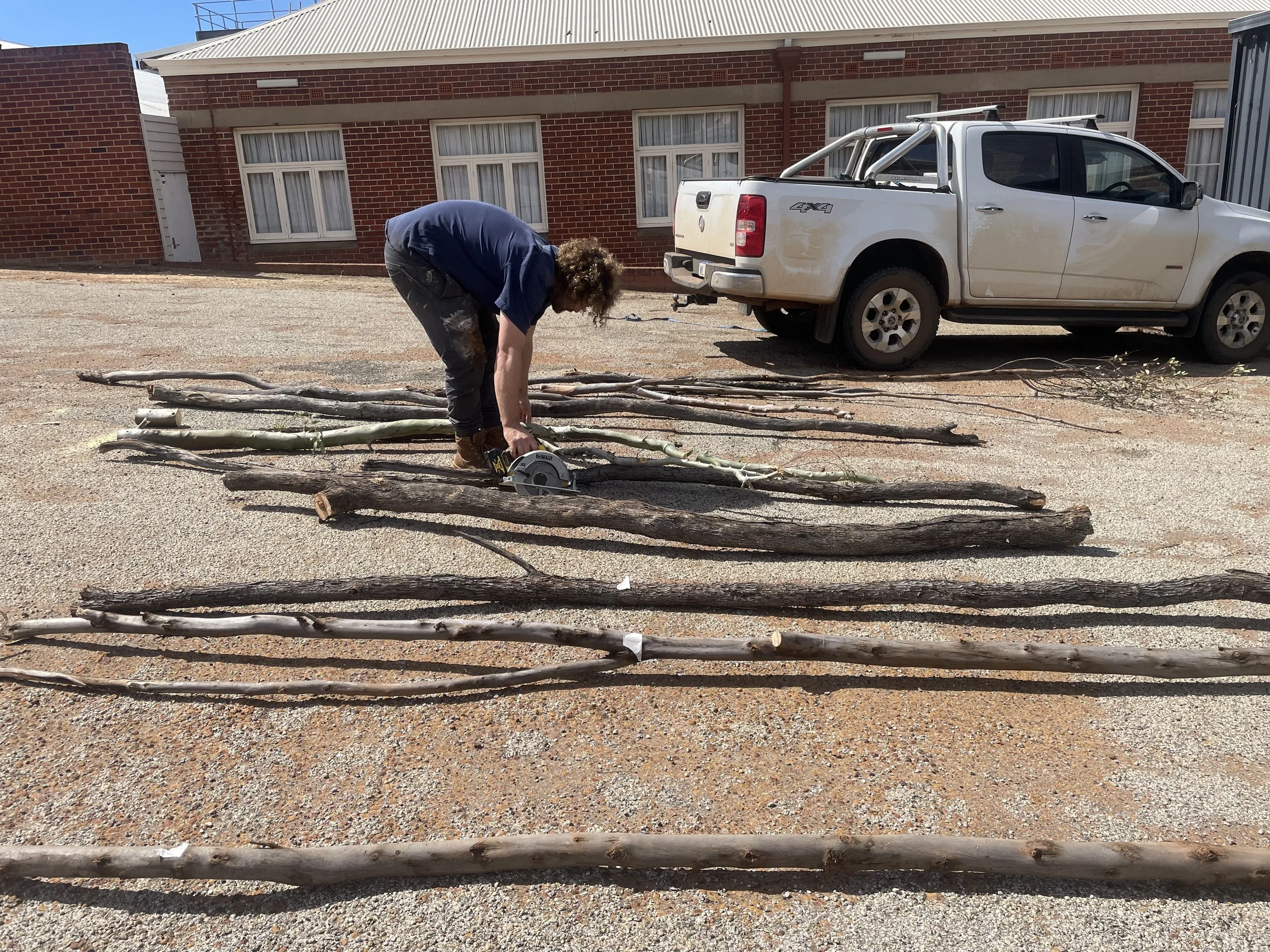
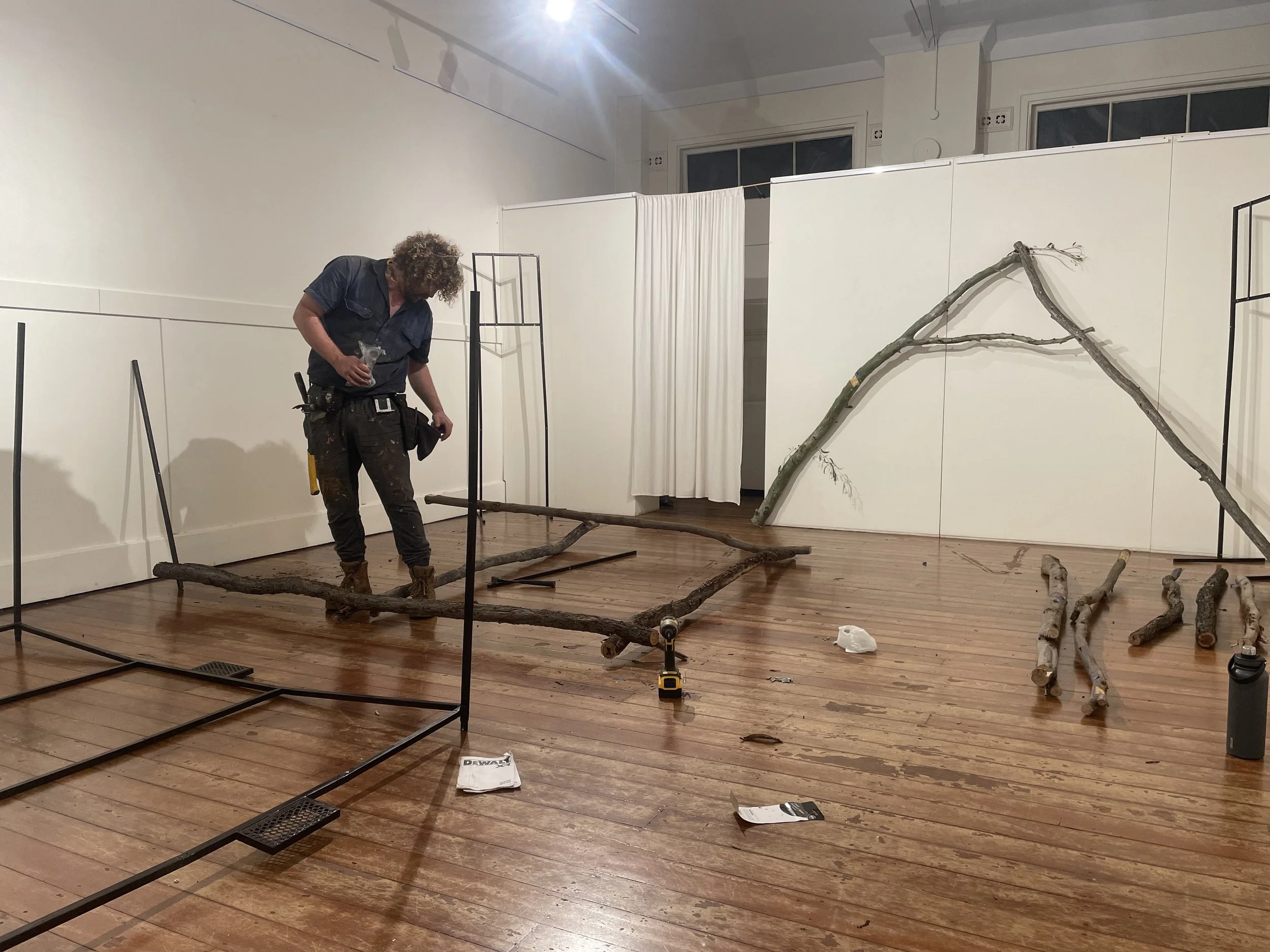
My third week of residency in Narrogin has passed in what feels like the blink of an eye. Time here seems to move differently, slower in rhythm, yet faster in feeling as each day becomes a dialogue between the land, the work, and the self. I have spent long hours in the gallery, watching the pieces gradually take form, as daylight slips into night and back again. The process of assembling the installation has been both physical and meditative, like a conversation with materials, textures, and sounds that seem to carry their own memories. Along the way, I have been fortunate to meet and learn from local producers, particularly Thomas D’Arcy, whose deep understanding of the region’s natural elements and technical support have been invaluable. His generosity and insights have helped me see the connection between craft and environment more clearly and how each gesture of making is also an act of listening to place.
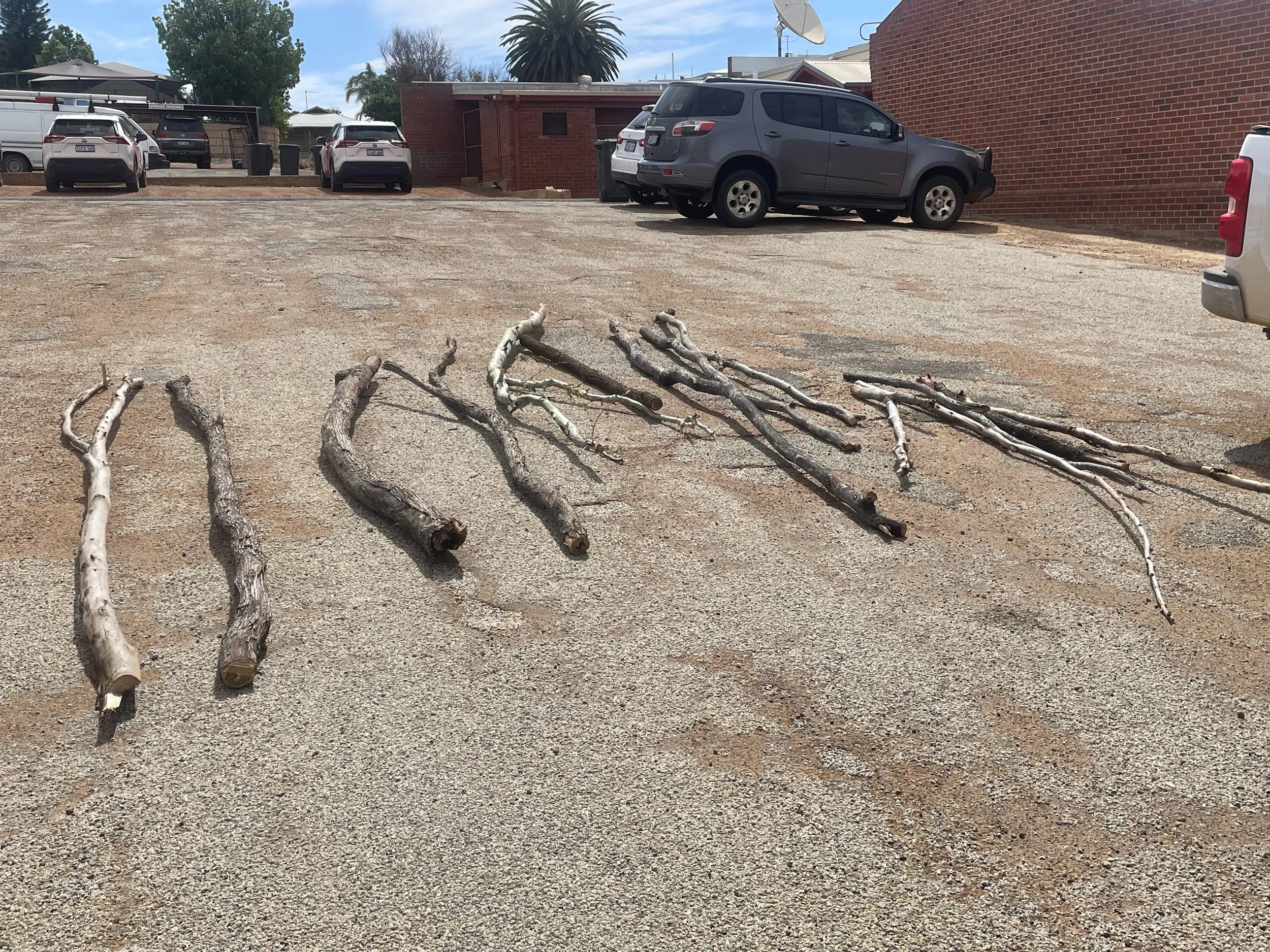
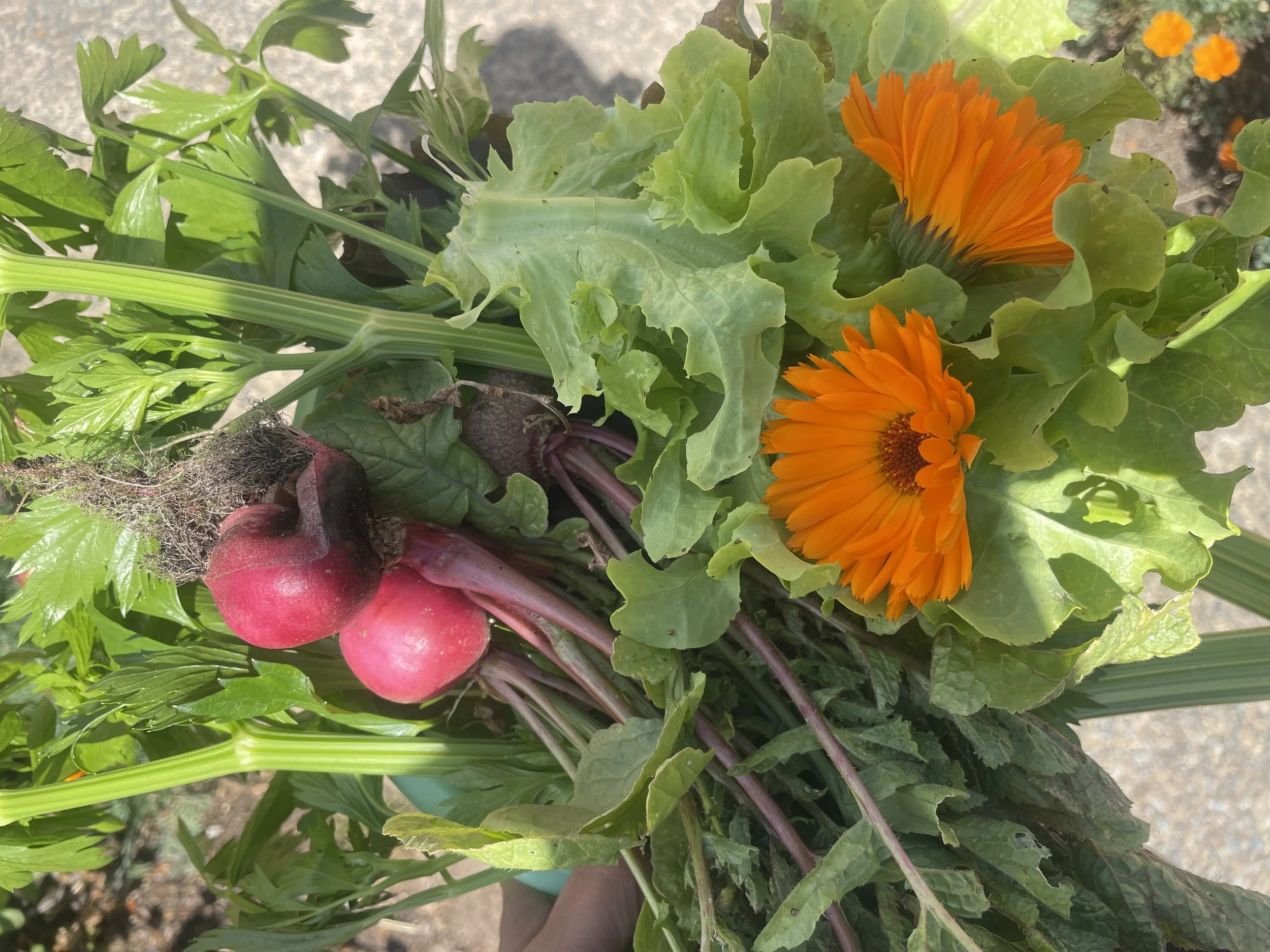
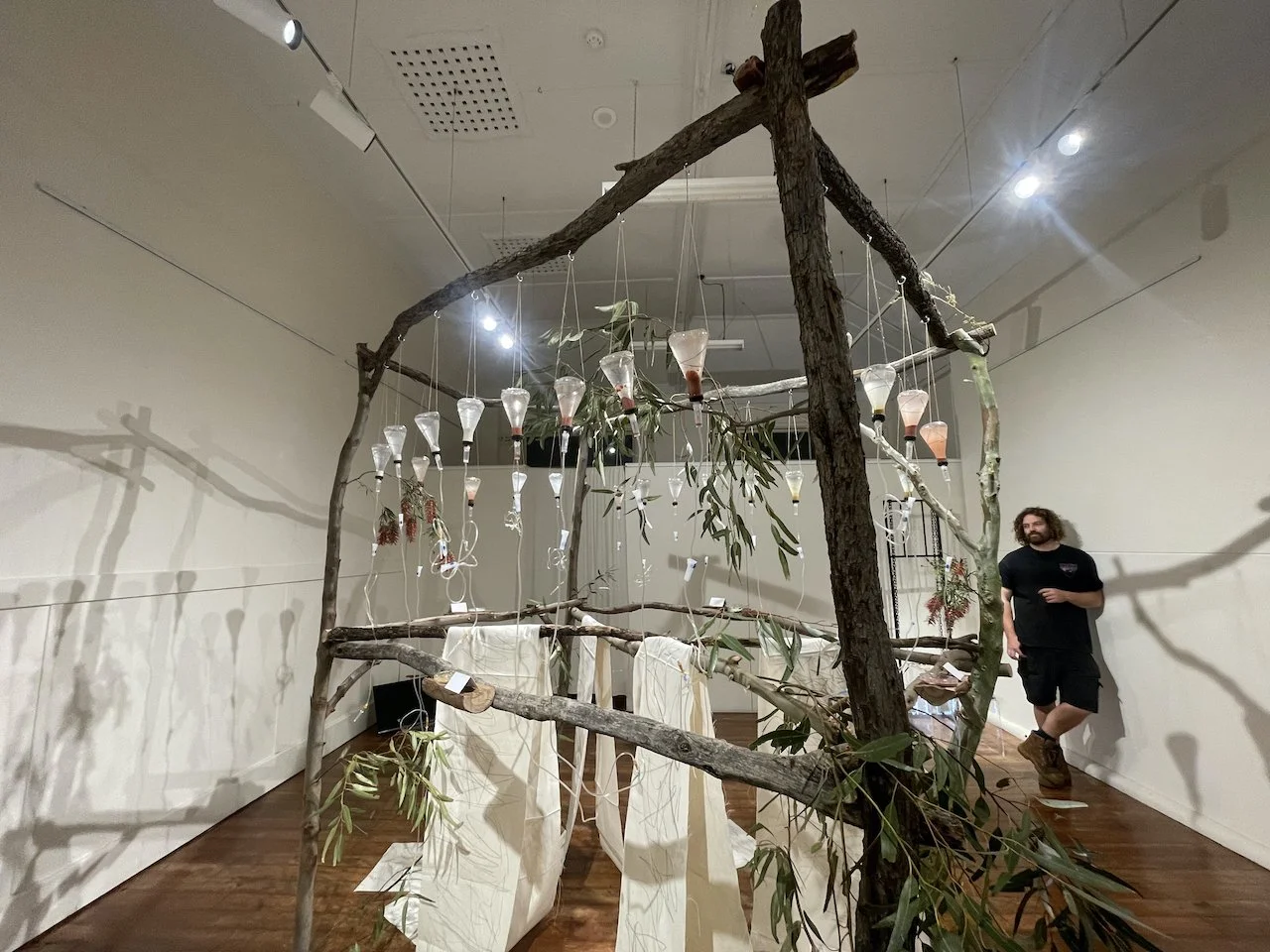
Together, we decided to shape the structure using local bark collected from the surrounding bushland, a decision that transformed the work in unexpected ways. The bark carries the scent of soil, the trace of rain, and the quiet resilience of the Australian landscape, bringing a raw, tactile honesty to the installation as if the Earth itself is participating in the act of creation. Within the gallery, the work unfolds as a natural geological gradient: Red (Hematite), Yellow (Goethite), Brown (Limonite), and White (Kaolinite), a slow and poetic transition from fire, life, soil, to silence. This movement of colour and meaning mirrors the cycles of transformation found in nature: oxidation, regeneration, decay, and renewal. During this period, I also joined a warm community lunch at the Gnarojin Community Garden, where we picked our own ingredients directly from the garden. It was a grounding and joyful experience, cooking and sharing food that came from the same soil that inspired my work, surrounded by the scent of fresh herbs, laughter, and conversations about land, plants, and the passing of seasons. In that moment, I felt the same rhythm of connection that runs through the pigments, a living dialogue between people, earth, and creation.
As the structure took shape, I began assembling the four fermented ochres: Hematite, Goethite, Limonite, and Kaolinite, each representing a distinct phase of transformation within the Earth’s living system. These pigments were connected to DIY electronic sensors that captured subtle environmental changes, such as moisture, temperature, and conductivity. The signals were then translated into sounds, forming a sonification of the ochres, a way of letting the Earth’s slow, invisible movements speak through vibration and rhythm. The sound data was further transformed into video projections, creating an immersive audiovisual landscape that mirrors the mineral’s inner life. From this process, I developed a series of perfumes that embody each pigment’s sensory essence. The scent of fire, moisture, humus, and purity then merges geological matter with the human sense of memory and emotion.
This journey became even more meaningful through my conversations with Ross Storey, a Wilman Noongar custodian, who generously shared his knowledge of the spiritual and cultural significance of ochres. He spoke about how ochre has long been used in Indigenous rituals, connecting the body to the land as an act of creation and belonging. His stories revealed the depth of meaning behind each colour and how it is not only a pigment but also a symbol of life, ancestry, and renewal. Through these exchanges, I came to understand the ochres not merely as materials, but as living bridges between people, earth, and spirit elements that have carried knowledge across generations and continue to ground us in our shared connection to the planet.
Red turns to yellow, brown to white,
Earth whispers softly through the night.
Each hue a breath, each sound a sign,
Of fire and soil in slow divine.
Finally, after many long days and nights of work, the installation stood beautifully in the gallery. The scent of the local bush bark blended with the earthy aroma of the fermented ochres, creating a natural atmosphere that felt alive and grounded. The pigments radiated in shades of red, yellow, brown, and white, each carrying traces of the land and the process that shaped them. It was as if the landscape itself had entered the space, breathing, changing, and remembering through colour, scent, and sound. Seeing it all come together brought a quiet sense of fulfilment, like witnessing the Earth tell its own story through the materials of its making.
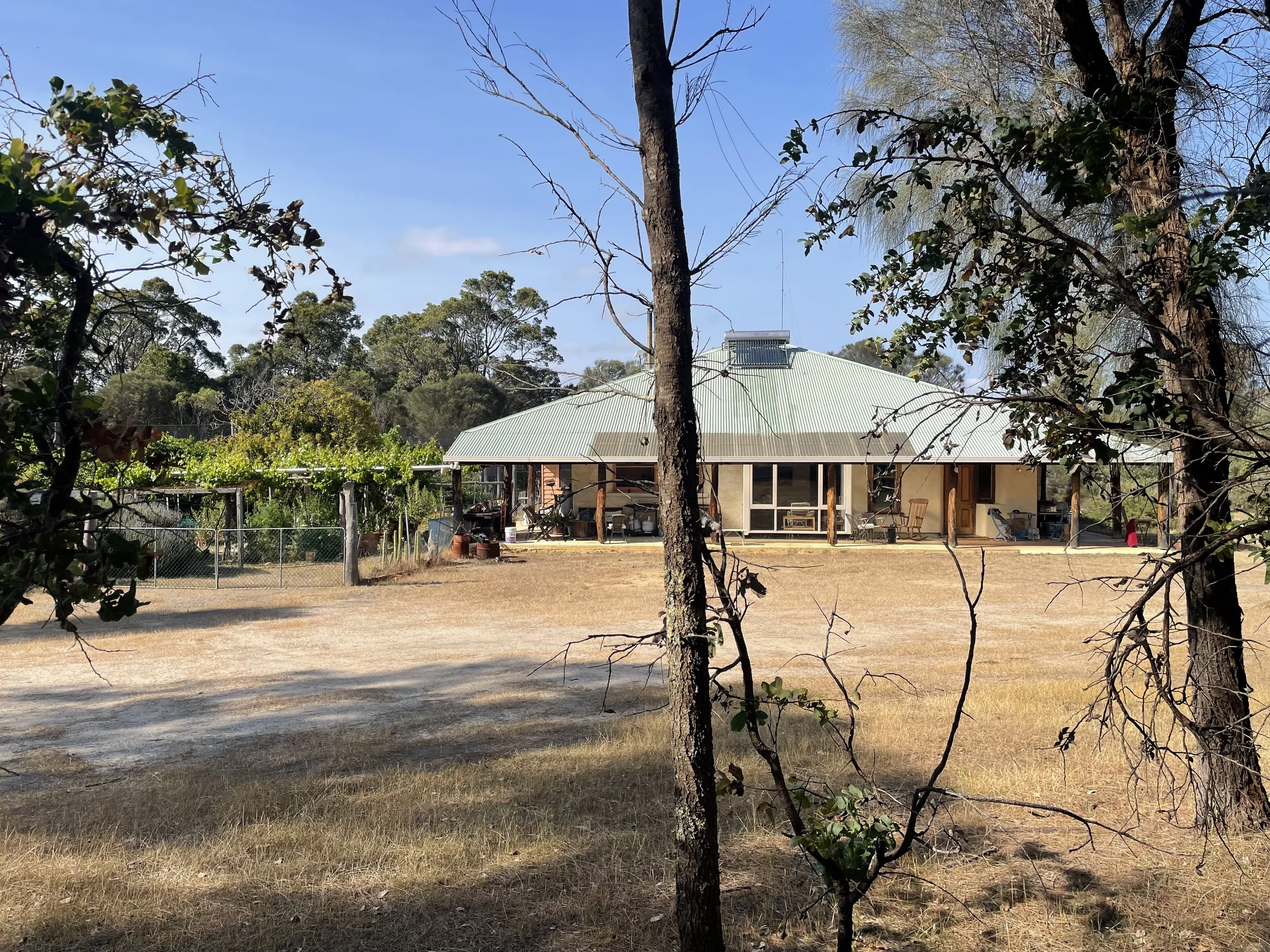
The opening night unfolded with warmth and a strong sense of togetherness. Ross Storey performed the Didgeridoo, his deep, resonant tones filling the room and connecting everyone to the spirit of the land. People gathered, talked, and listened, moving gently around the installation as if tracing the rhythm of the earth beneath their feet. The evening felt calm and sincere, filled with genuine curiosity and appreciation. Kimberly Williams from Arts Narrogin prepared a beautiful meal that brought everyone together in a shared spirit of generosity and joy. It was a simple yet meaningful night where art and community met in harmony. The following morning, I enjoyed a lovely breakfast with everyone involved in the exhibition process, a final moment of reflection and gratitude. Afterward, I spent time at the peaceful home of Ned Crossley and Avril Baxter, whose farm rests quietly within the bushland. The serenity of their place, surrounded by nature’s gentle sounds and warm light, offered a sense of stillness and closure, a perfect way to close the hectic weeks.
The didgeridoo hums softly and deeply,
As colours rise from ancient sleep.
The night grows still, the dawn draws near,
The land remembers, and we hear.
Images courtesy of the artist: Thomas D’Arcy is working on the trunks and branches, branches from the bushes, vegetables and flowers from Gnarojin Community Garden, installing the works, Pigments of the Earth installation, the peaceful home of Ned Crossley and Avril Baxter.
More information about the Circular Economies artists, host communities and projects as they unfold can be found by subscribing to SPACED’s monthly email newsletter, and following SPACED on Facebook and Instagram.
To learn more about HONF, M.Haryo Hutomo and Irene Agrivina, check out their respective Instagram profiles.
Circular Economies is produced as a joint partnership by PICA - Perth Institute of Contemporary Arts and SPACED.
Explore our past programs

Know Thy Neighbour #3 (2021-23). Know Thy Neighbour #3 investigates notions of place, sites of interest, networks, and social relationships with partner communities.

Rural Utopias (2019-23). Rural Utopias is a program of residencies, exhibitions and professional development activities organised in partnership with 12 Western Australian rural and remote towns.
ence.