
Circular Economies Residency: Linda Tegg in Carnarvon #6
Linda Tegg is currently working with the community of Gwoonwardu/Carnarvon, hosted by Shire of Carnarvon. This residency is part of SPACED’s current regional residency program, SPACED 5: Circular Economies.
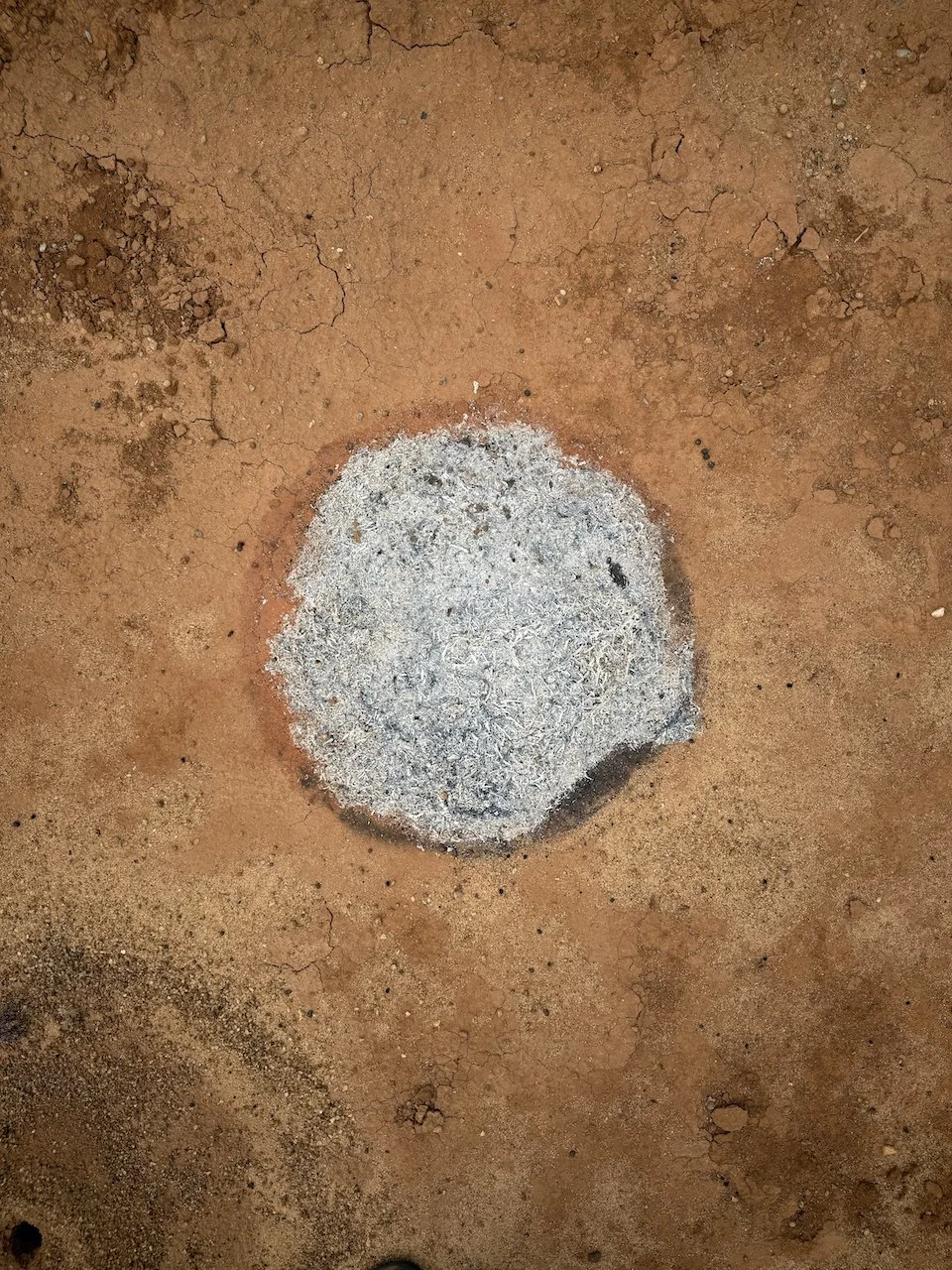
Walking around the Carnarvon Arboretum I’m seeing circles everywhere, ash and ant nests with the same dimensions. I can see the fire barrels and conclude that there must have been a brilliant party though here, with fires lighting a path through the scrub.
…
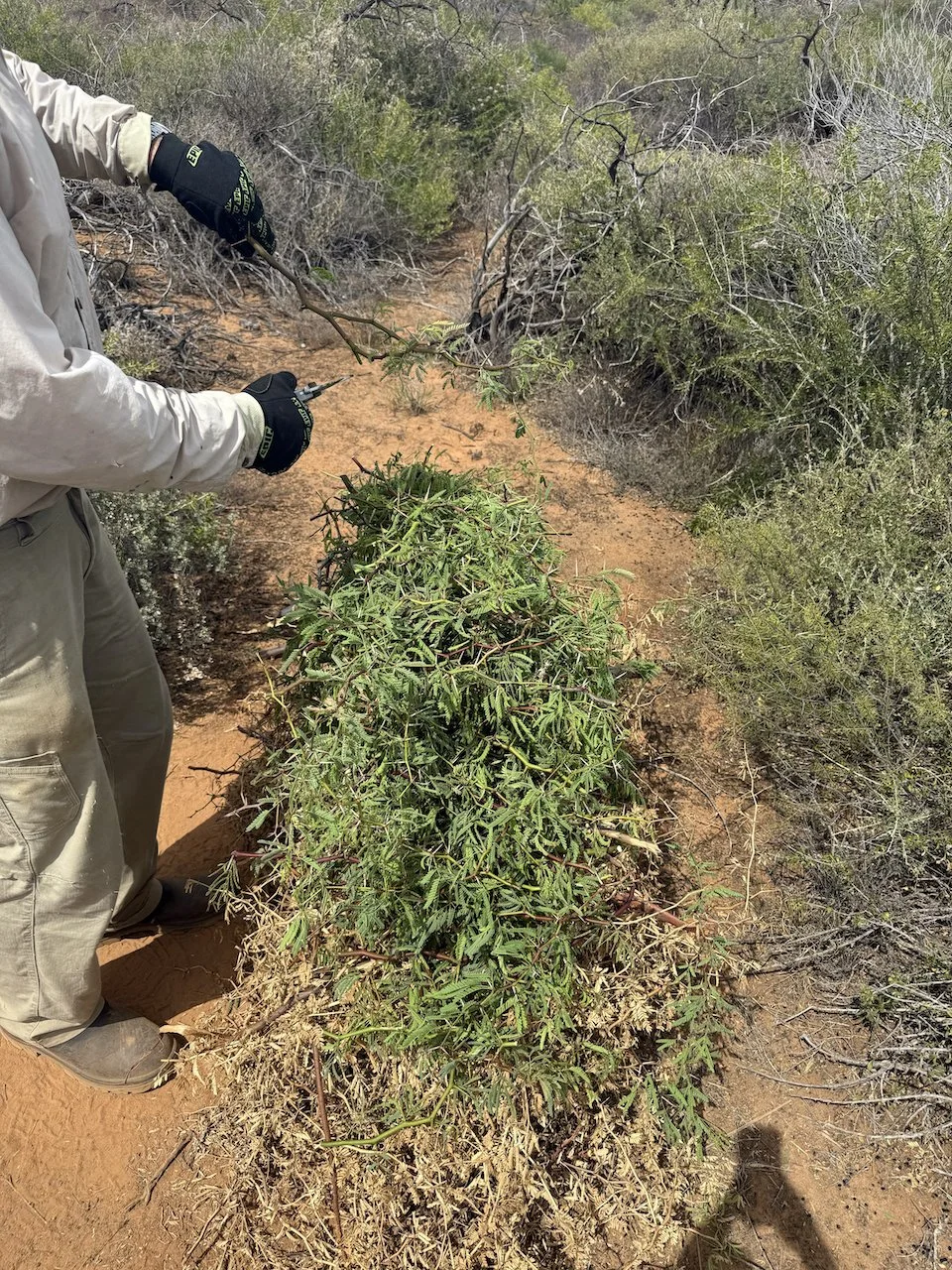
There is a lot of bush tucker out and Traditional Owner Raymond Edney is keen to take the kids out to look for bush lollies. They’re not quite ready yet, but there are lots more to find, we see Emus and collect handfuls of berries by Bibbawarra bore. Although the surrounding area has recently been cleared for restoration, thorns dig nearly an inch into the soles of our shoes. These are from the mesquite tree, introduced to the area by camels. They’re distinguishable in the landscape by their horizontal character.
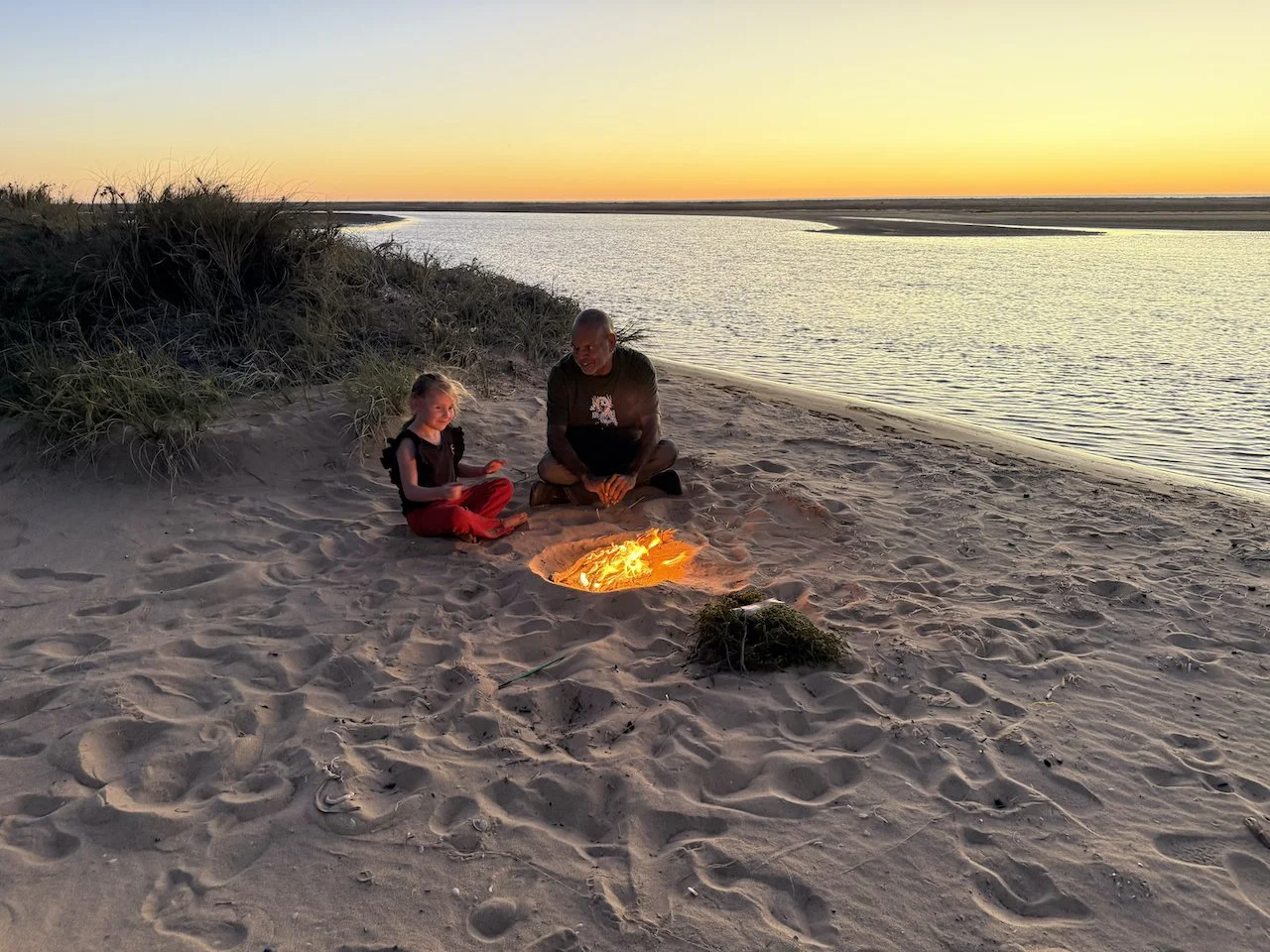
Thoroughly engaged in the foraging, Edgar is keen to catch a fish. We drive out to Miabooolya on sunset. By the time I catch up, Raymond and Ed have already called out to the ancestors. I cast out the line and hand it over to Ed, barely three minutes pass and he’s got something on the line. He pulls in a brim, unbelievable. This fish is the first he’s ever caught.
Raymond and the kids build a fire while David and I try – unsuccessfully - for another fish.
…
Four pelicans circle overhead as I pick up a cable from producer Rochelle O’Brien, following our conversation around local birdlife she invites me to sit on her veranda where she starts and finishes each day. Looking out over the parkland and the river beyond that she says ‘It’s our humble home and I love it’ with such conviction you wouldn’t want to be anywhere else.
…
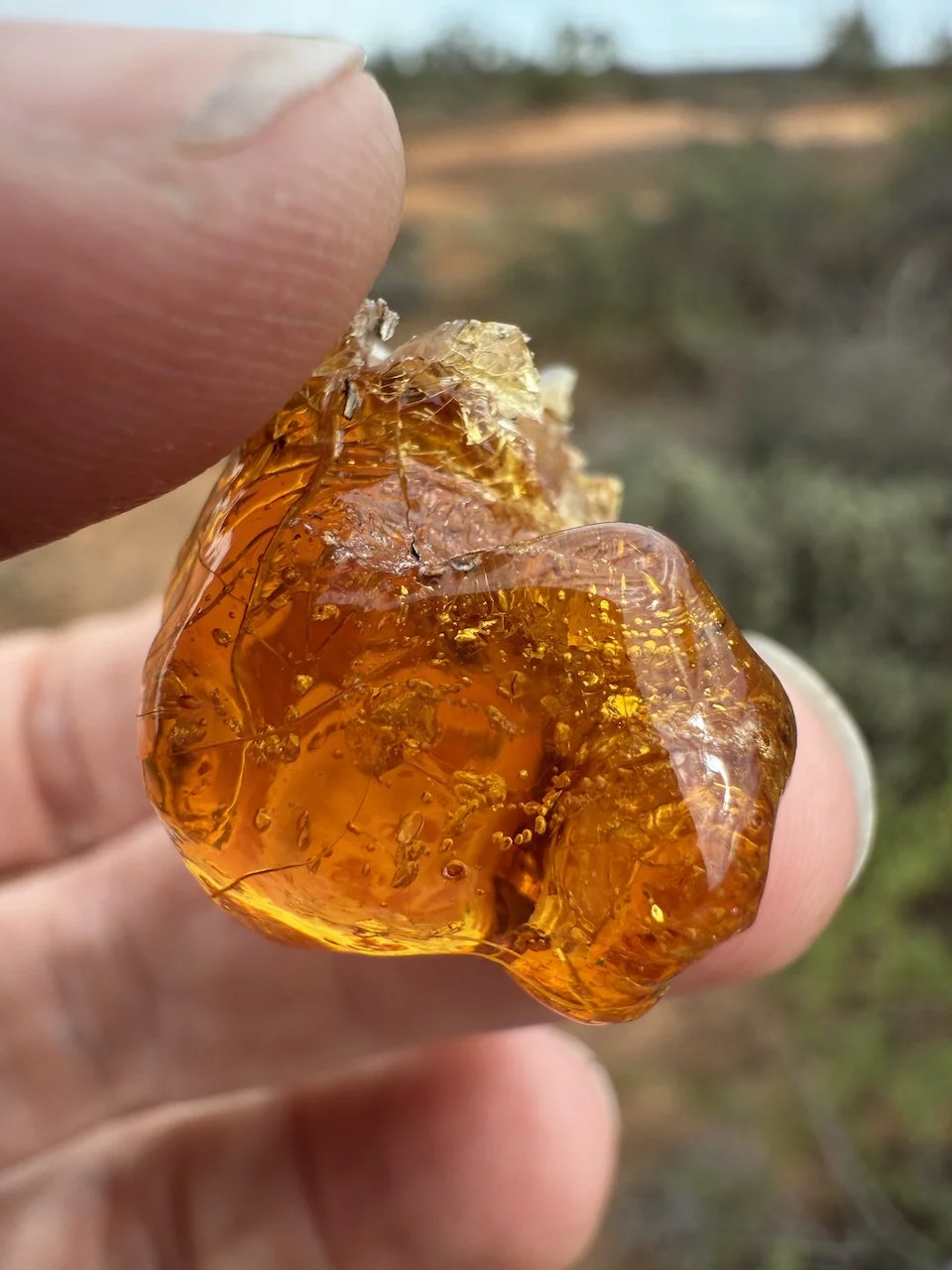
Raymond takes me out looking for bush lollies. We go from tree to tree finding sweet sap hardening in the shrubs just where the branches are dying off. They catch the light, they’re clear, light yellow and amber, the taste shifts too from sweet to sour.
Four of us meet afterwork to look at a medicinal tree. It’s a moringa, also known as a miracle tree, it’s health benefits for humans are wide ranging from preventing cancer to accelerating wound recovery. The dry pods crack into three.
…
At Jubilee Hall Linda Ebner introduces me to the art of trapunto, an Italian quilting technique which uses soft padding to bring selective areas of the fabric into relief. We look at pictures of a 13th century Sicilian coverlet depicting the forbidden love of Tristan and Isolde in remarkable detail. This quilt is amongst the oldest textiles in the Victoria Albert Museum’s Collection.
I’m learning the technique to form the pattern pressed into a concrete telecom access point I’ve traced off the main street.
…
Considering the weathered concrete on the telecom access point alongside the pristine grey cotton I’m using to represent it; I decide to dye the fabric using local plants. Of course, this is a complex proposition for me as I begin to think of all the plants I’ve been noticing on this trip.
As a first step I head to the arboretum, looking out for a substantial bunch of drosera. I come across Les in the process of removing a mesquite tree. It’s tough work, but somehow, he’s managed to transform this prickly sprawling plant into a neat pile. He works next to a barrel; the circles of ash I saw last week weren’t residue from a party but the careful removal of an invasive species from the arboretum.
I take a flower from the felled mesquite and a bit of pot ash from one of the circles. The morning goes on, I look for, but don’t find, a berry tree Raymond told me about, I gather a handful of sea grass that I had heard recently blown on shore at pelican point, I remember the acacia that’s in bloom along the highway and think about how much it would be ok for me to take of it. I then think of the mother of millions succulent that Kevin grows at the Space Museum and Jo Bumbak’s mangoes, and the abundance of banana leaves, not to mention the moringa pod that’s been driving around with me for a couple of days now.
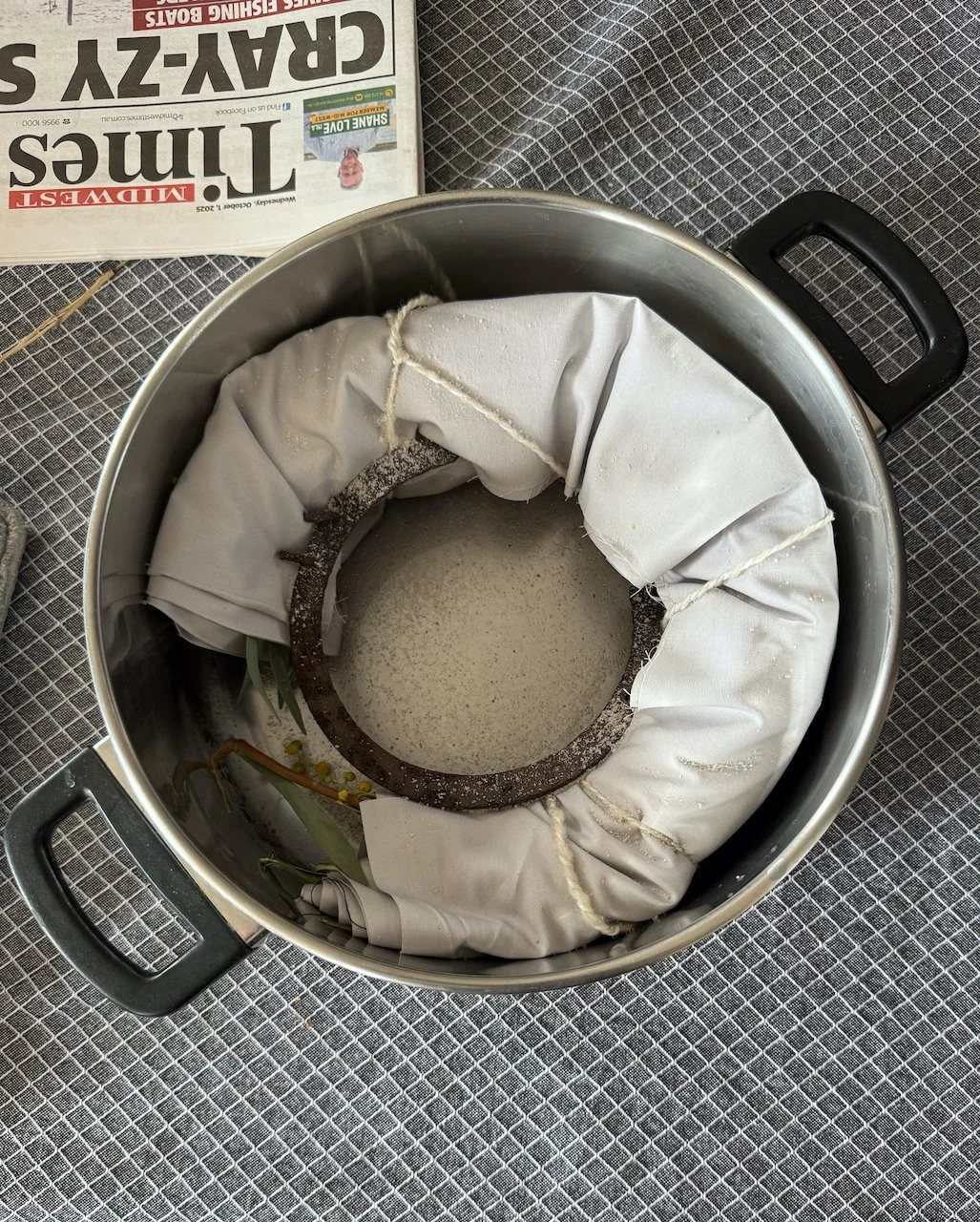
Back at the house I bundle it all up and boil it in a pot with salt, vinegar and a rusty horseshoe.
…
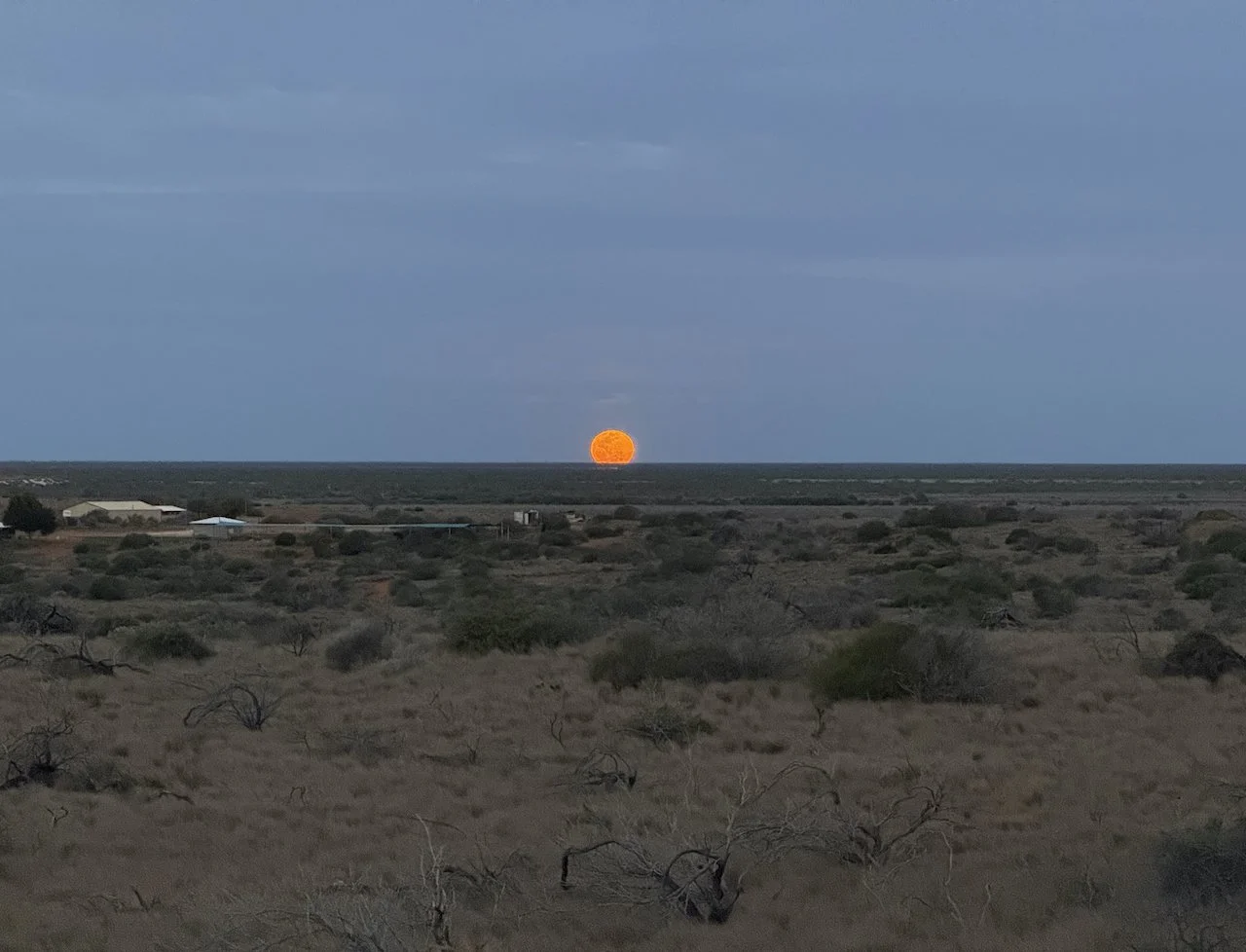
Images courtesy of the artist: Ash circle, Raymond Edney and Hester by the Fire, full moon, bush lollies, mesquite tree, dying pot.
More information about the Circular Economies artists, host communities and projects as they unfold can be found by subscribing to SPACED’s monthly email newsletter, and following SPACED on Facebook and Instagram.
Learn more about Linda Tegg.
Circular Economies is produced as a joint partnership by PICA - Perth Institute of Contemporary Arts and SPACED.
Explore our past programs

Know Thy Neighbour #3 (2021-23). Know Thy Neighbour #3 investigates notions of place, sites of interest, networks, and social relationships with partner communities.
Whatever it is, the way you tell your story online can make all the difference.

Rural Utopias (2019-23). Rural Utopias is a program of residencies, exhibitions and professional development activities organised in partnership with 12 Western Australian rural and remote towns.
Whatever it is, the way you tell your story online can make all the difference.